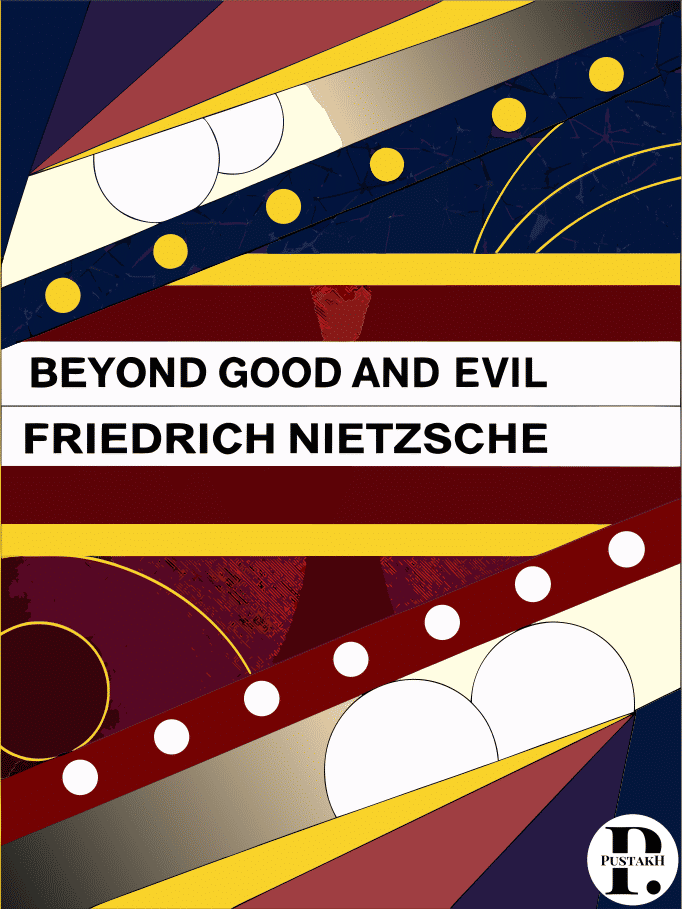
Beyond Good and Evil
by Friedrich Nietzsche
A Bold Critique of Morality and Truth that Questions Deeply Held Beliefs
9
Chapters
70+
Action steps
12
Minutes
PERSONALIZED
Action steps tailored to your goals in the Pustakh app
Preview — Chapter 01: On the Prejudices of Philosophers
This reflection dismantles the idea that philosophers are neutral seekers of truth. Instead, philosophy is presented as a deeply personal activity shaped by temperament, instinct, and unspoken desires. Systems of thought do not emerge from pure reason alone; they grow from the philosopher’s inner life. The central challenge here is directed at certainty. Absolute claims about truth, morality, or reality are treated with suspicion. The desire for final answers is framed as a psychological need rather than an intellectual achievement. Behind many grand theories lies a fear of uncertainty or chaos. There is also a critique of the worship of logic. Logic is shown to be a tool, not a ruler of reality. When logic is elevated above life, it becomes rigid and lifeless. Human existence, by contrast, is messy, contradictory, and driven by forces that do not always submit to rational explanation. Much attention is given to hidden motivations. Philosophers often defend values such as equality, humility, or self-denial while claiming objectivity. Yet these values may reflect personal weakness, resentment, or the inability to affirm life as it is. Moral systems are revealed as strategies, not eternal truths. The reader is encouraged to become a psychologist of ideas. Instead of asking whether a belief is logically sound, one is invited to ask what kind of life produces it. Every philosophy is a confession, even when it pretends to be universal. This perspective radically alters how authority, tradition, and intellectual prestige are perceived.
Keep reading on PustakhYou've read the opening. Here's where it gets practical.
The remaining 8 chapters, the full audio summary, and 70+ action steps personalized to your goals unlock with a free 3-day trial.
Start free 3-day trialNo credit card required · Cancel anytime
Beyond Good and Evil summary — FAQ
What will I get from the Beyond Good and Evil summary on Pustakh?
The key ideas of "Beyond Good and Evil" by Friedrich Nietzsche, distilled into a roughly 15-minute read across 9 chapters, plus 70+ personalized action steps built around your goals and an optional audio version.
How long does the Beyond Good and Evil summary take?
About 12 minutes to read the full summary on Pustakh, or you can listen to the audio version.
Does Beyond Good and Evil have an audio summary?
Select Pustakh titles include audio summaries you can play in your browser, and new audio titles are added every week.
Is the Beyond Good and Evil summary free?
You can read the introduction to "Beyond Good and Evil" for free. Full access to every chapter and your personalized action steps is included with a Pustakh subscription. New accounts start with a free 3-day trial — no credit card required.
More Spirituality & Mindfulness summaries
View all
70+ action steps from Beyond Good and Evil, tailored to your goals in Pustakh
- Tailored to your context and what you are working on
- Personalized steps per chapter, not generic checklists
- Read and listen on your schedule—then act with clarity
- Unlock the full library with a simple subscription
We'll set it up as we learn what you're working on.