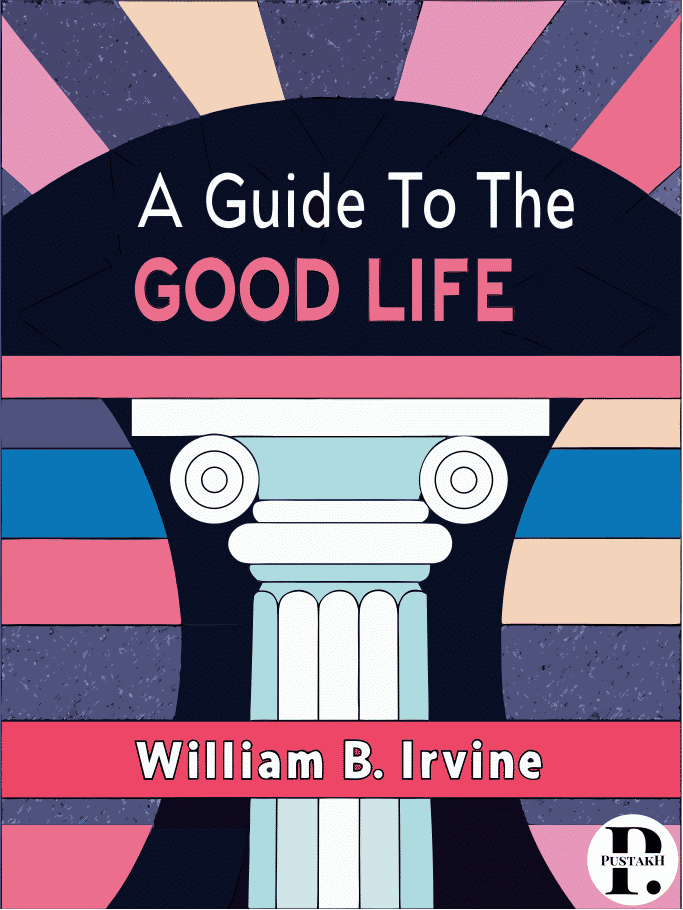
A Guide to the Good Life
by William B. Irvine
The Ancient Art of Stoic Joy
18
Chapters
142+
Action steps
15
Minutes
PERSONALIZED
Action steps tailored to your goals in the Pustakh app
Preview — Chapter 01: Philosophy Takes an Interest in Life
Philosophy is often misunderstood as distant or impractical, yet its origins tell a different story. It emerged as a response to suffering, uncertainty, and the search for meaning. Long before becoming academic, it functioned as guidance for daily living. Early philosophical traditions focused on how to live well rather than how to think cleverly. Questions revolved around fear, desire, anger, and contentment. Wisdom was measured by inner stability, not intellectual achievement. The central insight offered is that external success does not guarantee inner peace. Without mental discipline, prosperity amplifies anxiety rather than dissolves it. Pleasure without restraint leads to restlessness instead of satisfaction. Modern life often leaves individuals without shared values or inner frameworks. When meaning is outsourced to status, productivity, or approval, disappointment becomes inevitable. Philosophy steps in as a stabilizing force, offering principles that anchor attention and values. Stoic thought stands out because it refuses to depend on favorable conditions. It teaches calm regardless of outcomes. Attention shifts from shaping the world to shaping perception, from managing events to managing responses. This approach treats emotions as signals rather than commands. Fear, anger, and desire are observed, questioned, and redirected. Through this process, emotional freedom becomes possible without emotional suppression. Philosophy regains relevance by returning to its original role. It becomes a quiet companion for life, helping decisions feel lighter, reactions feel slower, and satisfaction feel less fragile.
Keep reading on PustakhYou've read the opening. Here's where it gets practical.
The remaining 17 chapters, the full audio summary, and 142+ action steps personalized to your goals unlock with a free 3-day trial.
Start free 3-day trialNo credit card required · Cancel anytime
A Guide to the Good Life summary — FAQ
What will I get from the A Guide to the Good Life summary on Pustakh?
The key ideas of "A Guide to the Good Life" by William B. Irvine, distilled into a roughly 15-minute read across 18 chapters, plus 142+ personalized action steps built around your goals and an optional audio version.
How long does the A Guide to the Good Life summary take?
About 15 minutes to read the full summary on Pustakh, or you can listen to the audio version.
Does A Guide to the Good Life have an audio summary?
Select Pustakh titles include audio summaries you can play in your browser, and new audio titles are added every week.
Is the A Guide to the Good Life summary free?
You can read the introduction to "A Guide to the Good Life" for free. Full access to every chapter and your personalized action steps is included with a Pustakh subscription. New accounts start with a free 3-day trial — no credit card required.
More Spirituality & Mindfulness summaries
View all




142+ action steps from A Guide to the Good Life, tailored to your goals in Pustakh
- Tailored to your context and what you are working on
- Personalized steps per chapter, not generic checklists
- Read and listen on your schedule—then act with clarity
- Unlock the full library with a simple subscription
We'll set it up as we learn what you're working on.