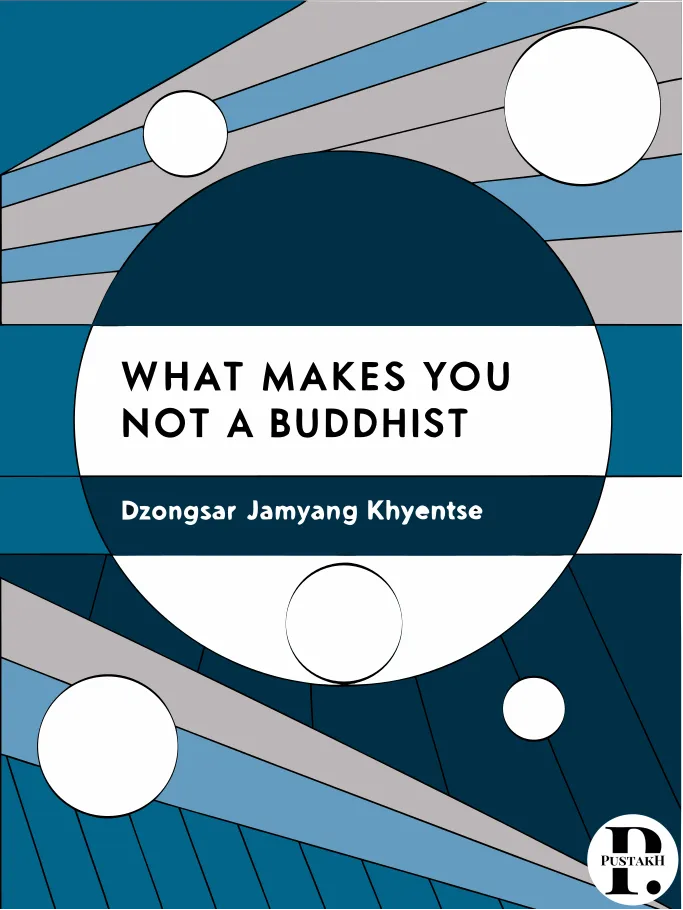
What Makes You Not a Buddhist
by Dzongsar Jamyang Khyentse
A Thought-Provoking Guide that Challenges Common Misconceptions about Buddhism
4
Chapters
37+
Action steps
11
Minutes
PERSONALIZED
Action steps tailored to your goals in the Pustakh app
Preview — Chapter 01: Fabrication and Impermanence
Everything you experience - from your morning coffee to your deepest sorrow - is a fabrication constantly dissolving into something new. This idea cuts to the heart of existence: nothing you see or hold is fixed. Your body changes cell by cell, your thoughts flicker like lightning, and even the mountains erode grain by grain. Yet, we cling to the illusion of stability, imagining that the people we love, the jobs we hold, or the identities we wear will stay as they are. That refusal to see the truth of impermanence is the seed of suffering. Life keeps whispering “change,” but we keep pretending not to hear. The exploration of impermanence here isn’t meant to be morbid - it’s meant to be liberating. If everything shifts, then there’s no need to be imprisoned by failure or pride. Each moment carries the power to reinvent itself. Pain softens when we realize it too is transient. The idea of permanence, on the other hand, breeds fear. We fear aging, loss, endings - not because they are painful, but because we expect constancy in a world built on movement. By exposing this tension, the teaching invites you to look at your own resistance: how you hold onto yesterday’s success, how you replay old wounds, how you build emotional fortresses around fragile things. Each of these is an attempt to fight time, to freeze what was never still. When you see through this illusion, impermanence becomes your ally rather than your enemy. Imagine the freedom of realizing that nothing you experience has to define you - that every story can end and begin again. Grief then transforms into gratitude, because you start noticing the beauty in the temporary. The fall of leaves, the lines on your face, the shifting of relationships - they all become proof that life is alive, not static. This understanding doesn’t numb you; it opens your heart wider. When you stop trying to make moments last, you begin to live them fully. To accept impermanence isn’t resignation - it’s awakening to the pulse of existence itself. The world doesn’t owe you permanence; it offers you movement, and that movement is what makes everything shimmer with possibility.
Keep reading on PustakhYou've read the opening. Here's where it gets practical.
The remaining 3 chapters, the full audio summary, and 37+ action steps personalized to your goals unlock with a free 3-day trial.
Start free 3-day trialNo credit card required · Cancel anytime
What Makes You Not a Buddhist summary — FAQ
What will I get from the What Makes You Not a Buddhist summary on Pustakh?
The key ideas of "What Makes You Not a Buddhist" by Dzongsar Jamyang Khyentse, distilled into a roughly 15-minute read across 4 chapters, plus 37+ personalized action steps built around your goals and an optional audio version.
How long does the What Makes You Not a Buddhist summary take?
About 11 minutes to read the full summary on Pustakh, or you can listen to the audio version.
Does What Makes You Not a Buddhist have an audio summary?
Select Pustakh titles include audio summaries you can play in your browser, and new audio titles are added every week.
Is the What Makes You Not a Buddhist summary free?
You can read the introduction to "What Makes You Not a Buddhist" for free. Full access to every chapter and your personalized action steps is included with a Pustakh subscription. New accounts start with a free 3-day trial — no credit card required.
More Spirituality & Mindfulness summaries
View all
37+ action steps from What Makes You Not a Buddhist, tailored to your goals in Pustakh
- Tailored to your context and what you are working on
- Personalized steps per chapter, not generic checklists
- Read and listen on your schedule—then act with clarity
- Unlock the full library with a simple subscription
We'll set it up as we learn what you're working on.