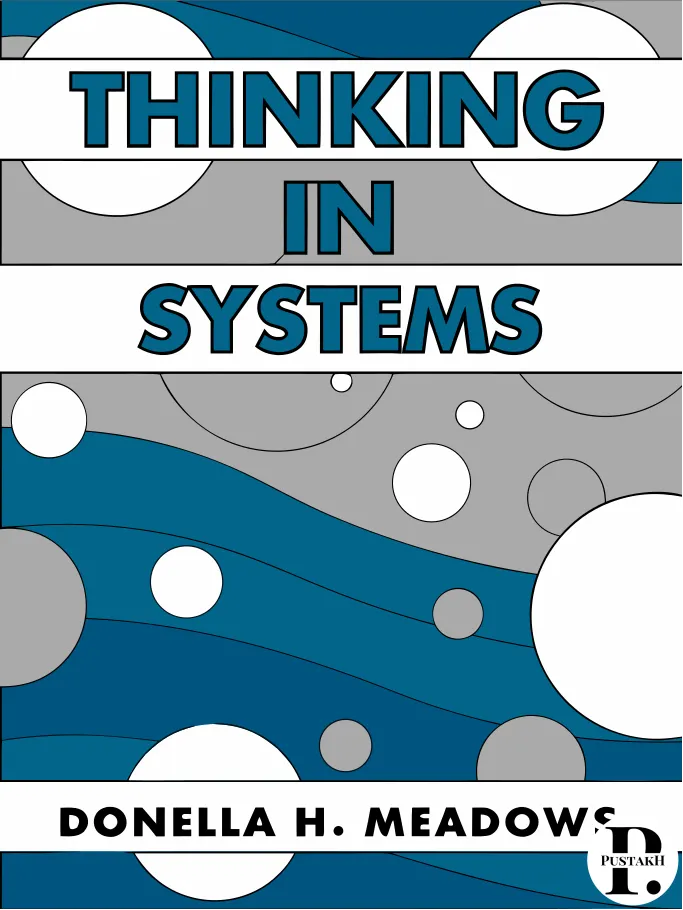
Thinking in Systems
by Donella H. Meadows
A Primer for Systems Thinking
7
Chapters
55+
Action steps
10
Minutes
PERSONALIZED
Action steps tailored to your goals in the Pustakh app
Preview — Chapter 01: The Basics
Systems operate through three key components: elements, interconnections, and purpose. While elements are easy to see - like people in an organization or parts of a machine - the interconnections and purpose are often hidden. The true behavior of a system depends less on its individual parts and more on how those parts interact over time. For instance, changing one rule in a workplace or one incentive in an economy can alter how every part behaves, sometimes in unpredictable ways. Feedback loops form the heartbeat of every system. A balancing feedback loop works to stabilize outcomes - like a thermostat regulating temperature - while a reinforcing feedback loop amplifies change - like compound interest growing a bank account. Recognizing which loop dominates determines whether a system maintains equilibrium or spirals into growth or collapse. Most real-world systems contain both kinds, interplaying constantly. Delays further complicate things. When the effects of actions show up long after decisions are made, people tend to overreact or underreact. This leads to instability or oscillation - a pattern visible in everything from population growth to financial markets. Understanding these delays allows smarter, steadier responses that align with the natural pace of the system rather than fighting it. The beauty of the basics lies in their universality. Whether you’re studying climate change, relationships, or project timelines, the same principles apply. Every system can be mapped, observed, and influenced by understanding its stocks (accumulations) and flows (rates of change). By tracing how energy, information, or resources move through the system, you gain a clearer view of leverage - the small places where subtle shifts can change the entire outcome.
Keep reading on PustakhYou've read the opening. Here's where it gets practical.
The remaining 6 chapters, the full audio summary, and 55+ action steps personalized to your goals unlock with a free 3-day trial.
Start free 3-day trialNo credit card required · Cancel anytime
Thinking in Systems summary — FAQ
What will I get from the Thinking in Systems summary on Pustakh?
The key ideas of "Thinking in Systems" by Donella H. Meadows, distilled into a roughly 15-minute read across 7 chapters, plus 55+ personalized action steps built around your goals and an optional audio version.
How long does the Thinking in Systems summary take?
About 10 minutes to read the full summary on Pustakh, or you can listen to the audio version.
Does Thinking in Systems have an audio summary?
Select Pustakh titles include audio summaries you can play in your browser, and new audio titles are added every week.
Is the Thinking in Systems summary free?
You can read the introduction to "Thinking in Systems" for free. Full access to every chapter and your personalized action steps is included with a Pustakh subscription. New accounts start with a free 3-day trial — no credit card required.
More Learning & Skill Development summaries
View all
12 Books That Changed the World
by Melvyn Bragg

21 Lessons for the 21st Century
by Yuval Noah Harari

Actionable Gamification
by Yu-kai Chou

A Mind for Numbers
by Barbara Oakley

A Short History of Nearly Everything
by Bill Bryson
Build, Don’t Talk
by Raj Shamani
55+ action steps from Thinking in Systems, tailored to your goals in Pustakh
- Tailored to your context and what you are working on
- Personalized steps per chapter, not generic checklists
- Read and listen on your schedule—then act with clarity
- Unlock the full library with a simple subscription
We'll set it up as we learn what you're working on.