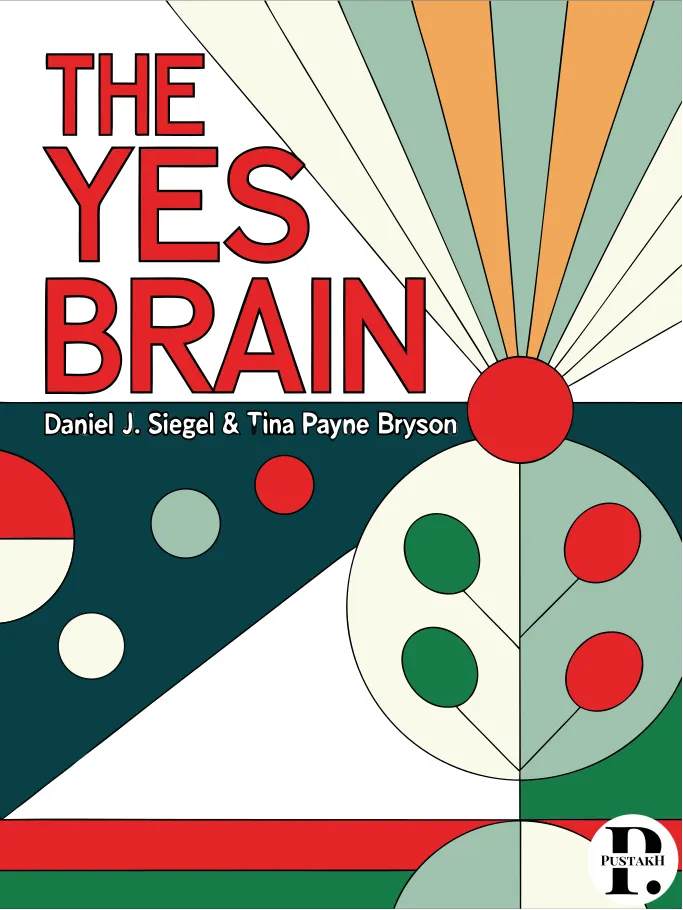
The Yes Brain
by Daniel J. Siegel & Tina Payne Bryson
How to Cultivate Resilience, Encourage Curiosity, and Inspire Passion and Purpose in Your Child's Life
5
Chapters
42+
Action steps
10
Minutes
PERSONALIZED
Action steps tailored to your goals in the Pustakh app
Preview — Chapter 01: The Yes Brain
The first core idea highlights what actually happens inside a child who feels cornered or overwhelmed. Their nervous system switches into survival mode - fight, flight, freeze, or overwhelm. In that moment, logic disappears, emotional regulation vanishes, and the ability to learn or cooperate collapses. Instead of seeing this through a lens of defiance, the Yes Brain approach reframes it as a child whose brain has temporarily lost access to openness. When a child feels balanced, supported, and safe, their mind enters a different state - a Yes state - where they can be curious, thoughtful, receptive, flexible, and collaborative. A Yes Brain is not compliance; it is an internal sense of safety that frees the child to explore instead of defend. Adults often expect maturity that the child’s brain physically cannot deliver yet, which leads to endless frustration on both sides. But when adults understand the biology underneath emotional reactions, compassion replaces confusion. The Yes Brain framework focuses on four fundamental capacities every child needs: balance, resilience, insight, and empathy. Balance helps them stay grounded when emotions rise. Resilience helps them recover from setbacks. Insight helps them understand themselves. Empathy helps them understand others. These aren’t traits; they are skills - skills every child can learn when the environment supports them. The focus then turns to how adults unintentionally trigger No Brain states - through pressure, multitasking, overstimulation, rigid rules, or emotional unpredictability. When adults regulate themselves, the environment stabilizes. The child’s nervous system co-regulates, shifting back into openness. Instead of lecturing a child mid-meltdown, the Yes Brain approach encourages adults to connect first, soothe the nervous system, and then guide once calm has returned. By embracing this mindset, adults begin supporting the unfolding of a child’s emotional and cognitive development rather than fighting against it. The entire home environment becomes calmer as understanding deepens.
Keep reading on PustakhYou've read the opening. Here's where it gets practical.
The remaining 4 chapters, the full audio summary, and 42+ action steps personalized to your goals unlock with a free 3-day trial.
Start free 3-day trialNo credit card required · Cancel anytime
The Yes Brain summary — FAQ
What will I get from the The Yes Brain summary on Pustakh?
The key ideas of "The Yes Brain" by Daniel J. Siegel & Tina Payne Bryson, distilled into a roughly 15-minute read across 5 chapters, plus 42+ personalized action steps built around your goals and an optional audio version.
How long does the The Yes Brain summary take?
About 10 minutes to read the full summary on Pustakh, or you can listen to the audio version.
Does The Yes Brain have an audio summary?
Select Pustakh titles include audio summaries you can play in your browser, and new audio titles are added every week.
Is the The Yes Brain summary free?
You can read the introduction to "The Yes Brain" for free. Full access to every chapter and your personalized action steps is included with a Pustakh subscription. New accounts start with a free 3-day trial — no credit card required.
More Parenting Essentials summaries
View all
Best Friends, Worst Enemies
by Michael Thompson, Catherine O’Neill Grace, & Lawrence J. Cohen
Brain-Body Parenting
by Mona Delahooke
Calm Parents, Happy Kids
by Laura Markham
Doing Life with Your Adult Children
by Jim Burns
Einstein Never Used Flash Cards
by Kathy Hirsh-Pasek, Roberta Michnick Golinkoff, Diane Eyer
Gentle Discipline
by Sarah Ockwell-Smith
42+ action steps from The Yes Brain, tailored to your goals in Pustakh
- Tailored to your context and what you are working on
- Personalized steps per chapter, not generic checklists
- Read and listen on your schedule—then act with clarity
- Unlock the full library with a simple subscription
We'll set it up as we learn what you're working on.