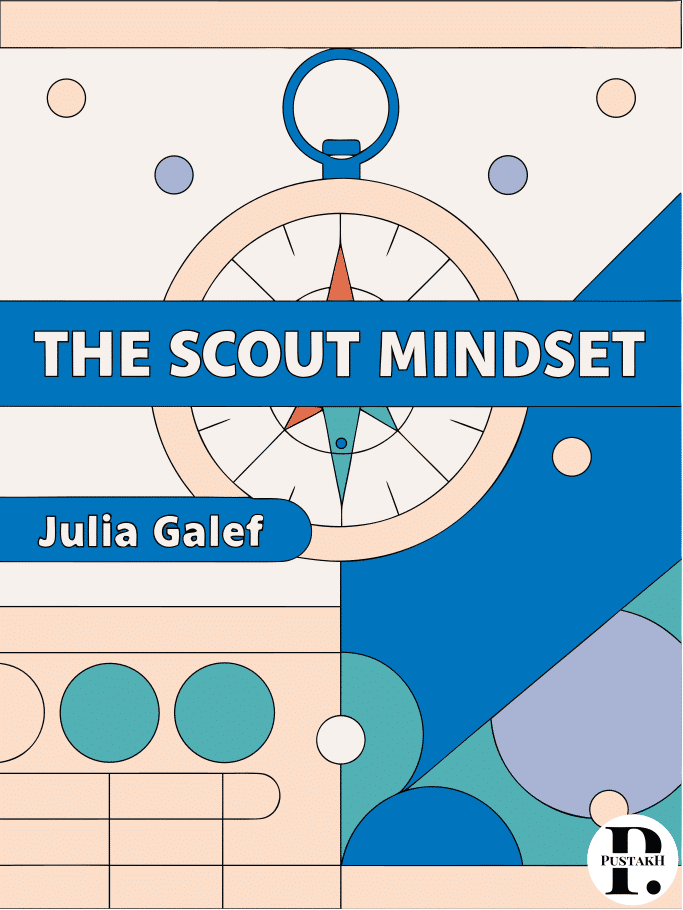
The Scout Mindset
by Julia Galef
Why Some People See Things Clearly and Others Don't
15
Chapters
95+
Action steps
15
Minutes
PERSONALIZED
Action steps tailored to your goals in the Pustakh app
Preview — Chapter 01: Two Types of Thinking
Two distinct approaches to thinking are contrasted. One treats beliefs like armor, designed to defend status, values, and group identity. The other treats beliefs like tools, meant to be tested, adjusted, and replaced when necessary. The difference is subtle but powerful, shaping how people respond to evidence, disagreement, and uncertainty. The defensive style is driven by motivation to protect. When a belief feels tied to identity or belonging, challenges feel threatening. This leads to selective reasoning, motivated skepticism, and emotional reactions disguised as logic. The mind works hard, but not in service of truth. It works in service of reassurance. The exploratory style prioritizes understanding. Beliefs are held lightly, not because they lack importance, but because accuracy matters more than attachment. Curiosity replaces fear, and confusion is treated as a signal to investigate rather than retreat. This approach does not eliminate bias, but it reduces its influence. The difference between these two approaches explains why intelligent people can disagree so deeply. Clear thinking depends less on raw intelligence and more on whether the mind is defending or exploring.
Keep reading on PustakhYou've read the opening. Here's where it gets practical.
The remaining 14 chapters, the full audio summary, and 95+ action steps personalized to your goals unlock with a free 3-day trial.
Start free 3-day trialNo credit card required · Cancel anytime
The Scout Mindset summary — FAQ
What will I get from the The Scout Mindset summary on Pustakh?
The key ideas of "The Scout Mindset" by Julia Galef, distilled into a roughly 15-minute read across 15 chapters, plus 95+ personalized action steps built around your goals and an optional audio version.
How long does the The Scout Mindset summary take?
About 15 minutes to read the full summary on Pustakh, or you can listen to the audio version.
Does The Scout Mindset have an audio summary?
Select Pustakh titles include audio summaries you can play in your browser, and new audio titles are added every week.
Is the The Scout Mindset summary free?
You can read the introduction to "The Scout Mindset" for free. Full access to every chapter and your personalized action steps is included with a Pustakh subscription. New accounts start with a free 3-day trial — no credit card required.
More Mindset & Psychology summaries
View all


95+ action steps from The Scout Mindset, tailored to your goals in Pustakh
- Tailored to your context and what you are working on
- Personalized steps per chapter, not generic checklists
- Read and listen on your schedule—then act with clarity
- Unlock the full library with a simple subscription
We'll set it up as we learn what you're working on.