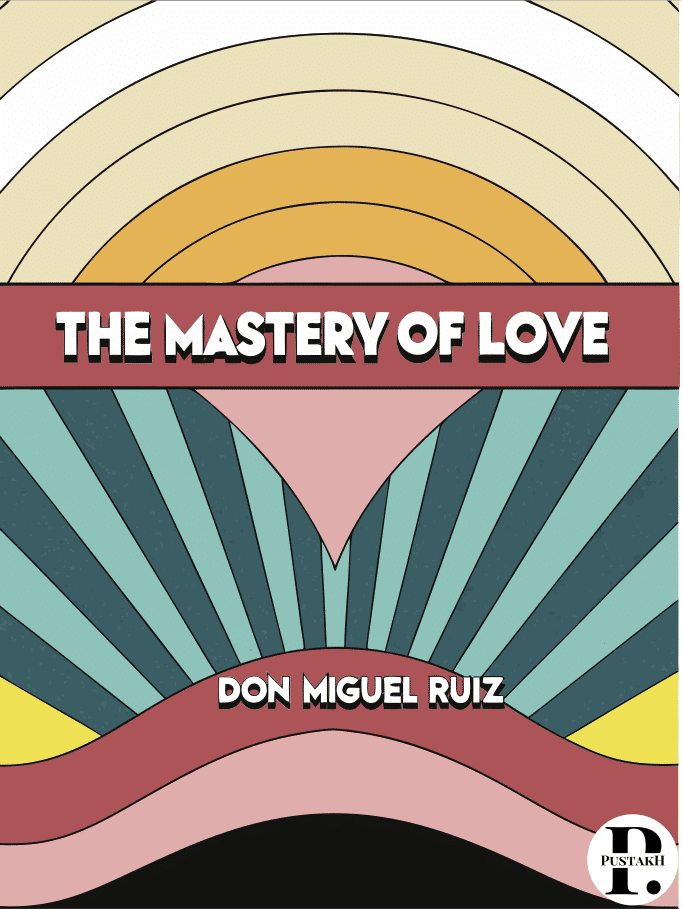
The Mastery of Love
by Don Miguel Ruiz
A Practical Guide to the Art of Relationship
13
Chapters
143+
Action steps
23
Minutes
PERSONALIZED
Action steps tailored to your goals in the Pustakh app
Preview — Chapter 01: The Wounded Mind
The central idea centers on the notion that what we perceive as human awareness is, at its heart, significantly flawed, operating through constructed falsehoods and habitual self-deception. People, from a very young age, consistently build and uphold elaborate, personal stories - essentially shaping their own versions of reality and projecting specific portrayals of themselves onto those around them, aiming to manage interactions and maintain a sense of control. This process is driven by a deep desire for acceptance and an equally powerful fear of being rejected, leading to a significant separation between a person’s genuine core and the image they outwardly present. The work uses the comparison of a “wounded mind” to a persistent, deeply rooted illness, much like an infected skin condition. Similar to how the inhabitants of a fictional world accept their painful skin as completely normal, humans often accept their emotional turmoil and predictable behavioral patterns as naturally occurring, failing to recognize the underlying psychological roots of these experiences. This shared “condition” manifests in repeated emotional responses - anger, jealousy, sadness, and self-rejection - these are practiced and learned through repetition, becoming ingrained methods of reacting and engaging with the world. The development of these “masters,” individuals who have become skilled at responding in predictable ways and maintaining specific emotional states, is closely linked to formative childhood experiences and the influence of key figures in a person’s life. Children, driven by a need for approval and a wish to avoid punishment, begin to adopt and continue the illusory behaviors and images they witness in their parents, teachers, and peers, initiating a cycle of learned responses. This domestication of the mind, akin to training an animal, generates a critical disconnect between a person’s true sense of self and their outward presentation. Denial plays a vital role as a primary defense, functioning as a “wall of fog” designed to obscure the painful truths about a person’s fabricated identity. This denial isn’t merely a conscious fabrication; it’s a deeply ingrained process that prevents individuals from seeing themselves and others with clarity. The constant necessity to maintain these carefully constructed images results in a warped view of reality, where relationships are based on projected fantasies rather than genuine connection. Furthermore, the concept of the “Dream of Hell” is introduced, representing the collective set of beliefs held by society - encompassing religion, culture, and accepted social norms - which actively perpetuates the cycle of suffering. This shared illusion strengthens the reliance on external validation and continues to fuel the habitual practice of maintaining these false representations. Ultimately, the work suggests that recognizing this fundamental deception, understanding this collective “mental institution,” is the initial step toward freedom from the patterns of emotional distress. Genuine liberation, it posits, comes from acknowledging the illusory nature of existence and aligning oneself with the underlying state of pure love and awareness that exists beneath the surface of this constructed dream.
Keep reading on PustakhYou've read the opening. Here's where it gets practical.
The remaining 12 chapters, the full audio summary, and 143+ action steps personalized to your goals unlock with a free 3-day trial.
Start free 3-day trialNo credit card required · Cancel anytime
The Mastery of Love summary — FAQ
What will I get from the The Mastery of Love summary on Pustakh?
The key ideas of "The Mastery of Love" by Don Miguel Ruiz, distilled into a roughly 15-minute read across 13 chapters, plus 143+ personalized action steps built around your goals and an optional audio version.
How long does the The Mastery of Love summary take?
About 23 minutes to read the full summary on Pustakh, or you can listen to the audio version.
Does The Mastery of Love have an audio summary?
Select Pustakh titles include audio summaries you can play in your browser, and new audio titles are added every week.
Is the The Mastery of Love summary free?
You can read the introduction to "The Mastery of Love" for free. Full access to every chapter and your personalized action steps is included with a Pustakh subscription. New accounts start with a free 3-day trial — no credit card required.
More Relationships & Social Skills summaries
View all



143+ action steps from The Mastery of Love, tailored to your goals in Pustakh
- Tailored to your context and what you are working on
- Personalized steps per chapter, not generic checklists
- Read and listen on your schedule—then act with clarity
- Unlock the full library with a simple subscription
We'll set it up as we learn what you're working on.