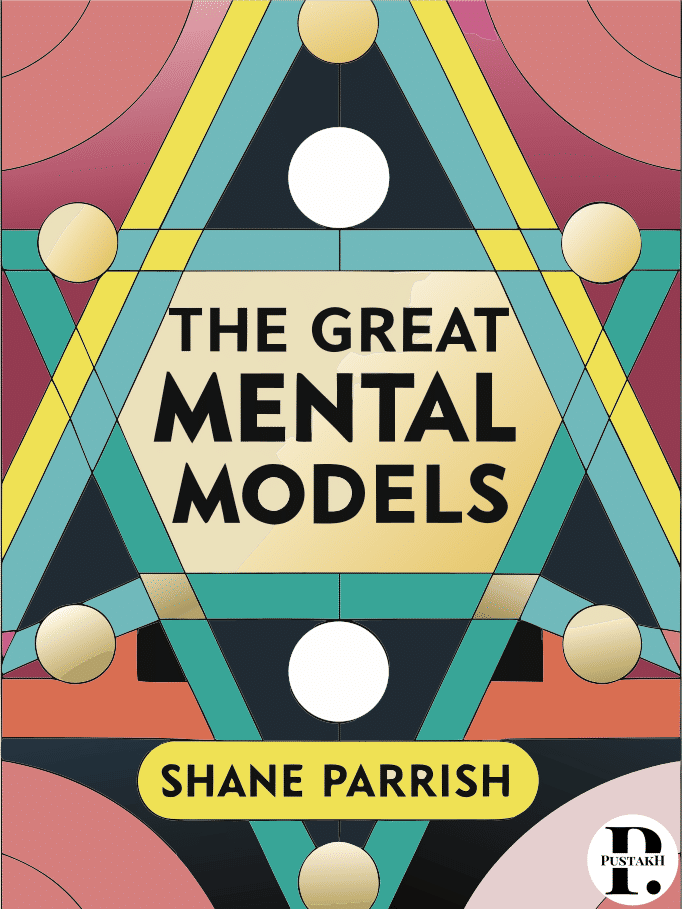
The Great Mental Models
by Shane Parrish
The Simple Tools That Explain the World
9
Chapters
64+
Action steps
12
Minutes
PERSONALIZED
Action steps tailored to your goals in the Pustakh app
Preview — Chapter 01: The Map Is Not the Territory
Maps are simplifications. They strip away details to highlight what matters for a particular purpose. A street map shows roads but not soil composition. A weather map highlights temperature patterns but ignores the design of houses. In life, every framework, model, or explanation functions like a map. It can be immensely useful, but it is never the full reality. Confusing the map with the territory, mistaking a model for reality itself, leads to blind spots, overconfidence, and error. The power of this model lies in remembering that all representations are incomplete and context-dependent. A financial forecast is only one scenario, not the inevitable future. A job description captures key tasks but never fully expresses the culture, challenges, or surprises that come with the role. This humility toward models encourages constant questioning: “What’s missing here? What assumptions are baked into this map? Where might it mislead me?” Consider medical diagnoses. A doctor uses models of disease to interpret symptoms. But real patients don’t always fit neatly into categories. Acknowledging that the diagnosis is a map, not the territory of the person’s actual condition, keeps practitioners curious and open to anomalies. Similarly, in business strategy, a market analysis may guide investment, but unforeseen variables like regulation, consumer behavior, or technological disruption can make the actual territory look very different. Recognizing the distinction doesn’t make maps useless; it makes them more valuable. The key is adaptability. By layering different maps and comparing them to reality, better decisions emerge. Holding maps lightly, while respecting their power, is the essence of sound judgment.
Keep reading on PustakhYou've read the opening. Here's where it gets practical.
The remaining 8 chapters, the full audio summary, and 64+ action steps personalized to your goals unlock with a free 3-day trial.
Start free 3-day trialNo credit card required · Cancel anytime
The Great Mental Models summary — FAQ
What will I get from the The Great Mental Models summary on Pustakh?
The key ideas of "The Great Mental Models" by Shane Parrish, distilled into a roughly 15-minute read across 9 chapters, plus 64+ personalized action steps built around your goals and an optional audio version.
How long does the The Great Mental Models summary take?
About 12 minutes to read the full summary on Pustakh, or you can listen to the audio version.
Does The Great Mental Models have an audio summary?
Select Pustakh titles include audio summaries you can play in your browser, and new audio titles are added every week.
Is the The Great Mental Models summary free?
You can read the introduction to "The Great Mental Models" for free. Full access to every chapter and your personalized action steps is included with a Pustakh subscription. New accounts start with a free 3-day trial — no credit card required.
More Learning & Skill Development summaries
View all
12 Books That Changed the World
by Melvyn Bragg
21 Lessons for the 21st Century
by Yuval Noah Harari

Actionable Gamification
by Yu-kai Chou
A Mind for Numbers
by Barbara Oakley
A Short History of Nearly Everything
by Bill Bryson
Build, Don’t Talk
by Raj Shamani
64+ action steps from The Great Mental Models, tailored to your goals in Pustakh
- Tailored to your context and what you are working on
- Personalized steps per chapter, not generic checklists
- Read and listen on your schedule—then act with clarity
- Unlock the full library with a simple subscription
We'll set it up as we learn what you're working on.