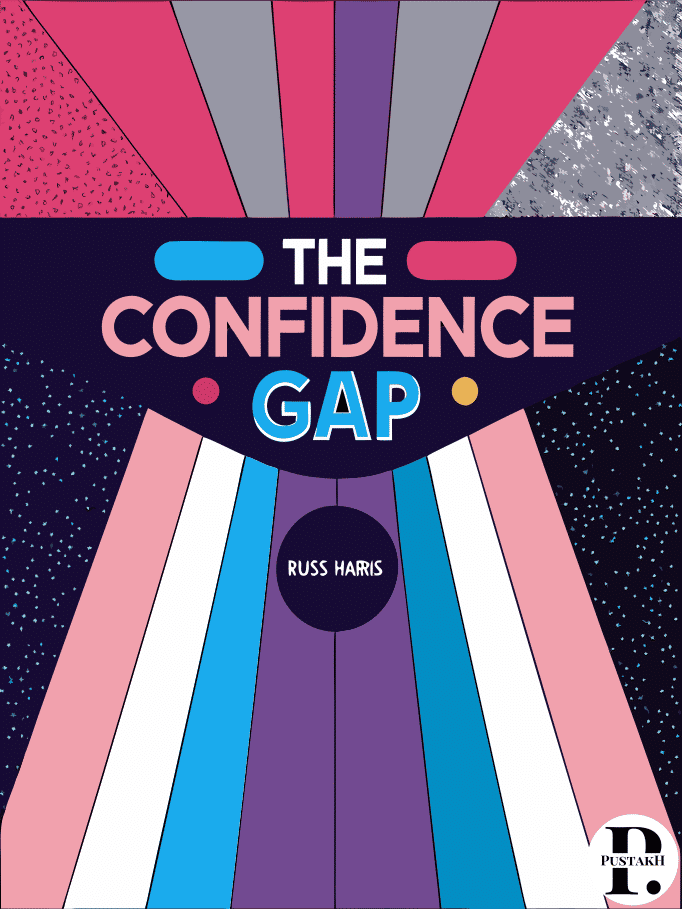
The Confidence Gap
by Russ Harris
A Guide to Overcoming Fear and Self-Doubt
23
Chapters
183+
Action steps
15
Minutes
PERSONALIZED
Action steps tailored to your goals in the Pustakh app
Preview — Chapter 01: Why Bother?
Fear and self doubt tend to show up precisely when something meaningful is at stake. They arise before important conversations, visible risks, creative work, or personal growth. Rather than indicating weakness, these emotions signal that the moment matters. Yet most people interpret fear as a warning sign to stop, retreat, or wait until they feel better. Confidence does not grow by eliminating fear; it grows by learning to move forward while fear is present. This reframing removes the pressure to feel ready before acting. A common pattern emerges when fear is treated as an obstacle. Avoidance brings immediate relief, which the brain registers as safety. Over time, this relief reinforces withdrawal, teaching the mind that fear must be obeyed. Each avoided action shrinks the range of experiences a person is willing to engage with, quietly eroding confidence. The alternative is willingness. Willingness means allowing uncomfortable thoughts and emotions to exist without letting them dictate behavior. Action becomes the driver of confidence rather than the reward for feeling confident. Confidence begins to resemble a muscle that strengthens through repeated use. Small, imperfect actions build evidence of capability. Waiting for certainty delays growth indefinitely. Fear loses authority when action continues anyway.
Keep reading on PustakhYou've read the opening. Here's where it gets practical.
The remaining 22 chapters, the full audio summary, and 183+ action steps personalized to your goals unlock with a free 3-day trial.
Start free 3-day trialNo credit card required · Cancel anytime
The Confidence Gap summary — FAQ
What will I get from the The Confidence Gap summary on Pustakh?
The key ideas of "The Confidence Gap" by Russ Harris, distilled into a roughly 15-minute read across 23 chapters, plus 183+ personalized action steps built around your goals and an optional audio version.
How long does the The Confidence Gap summary take?
About 15 minutes to read the full summary on Pustakh, or you can listen to the audio version.
Does The Confidence Gap have an audio summary?
Select Pustakh titles include audio summaries you can play in your browser, and new audio titles are added every week.
Is the The Confidence Gap summary free?
You can read the introduction to "The Confidence Gap" for free. Full access to every chapter and your personalized action steps is included with a Pustakh subscription. New accounts start with a free 3-day trial — no credit card required.
More Mindset & Psychology summaries
View all
183+ action steps from The Confidence Gap, tailored to your goals in Pustakh
- Tailored to your context and what you are working on
- Personalized steps per chapter, not generic checklists
- Read and listen on your schedule—then act with clarity
- Unlock the full library with a simple subscription
We'll set it up as we learn what you're working on.