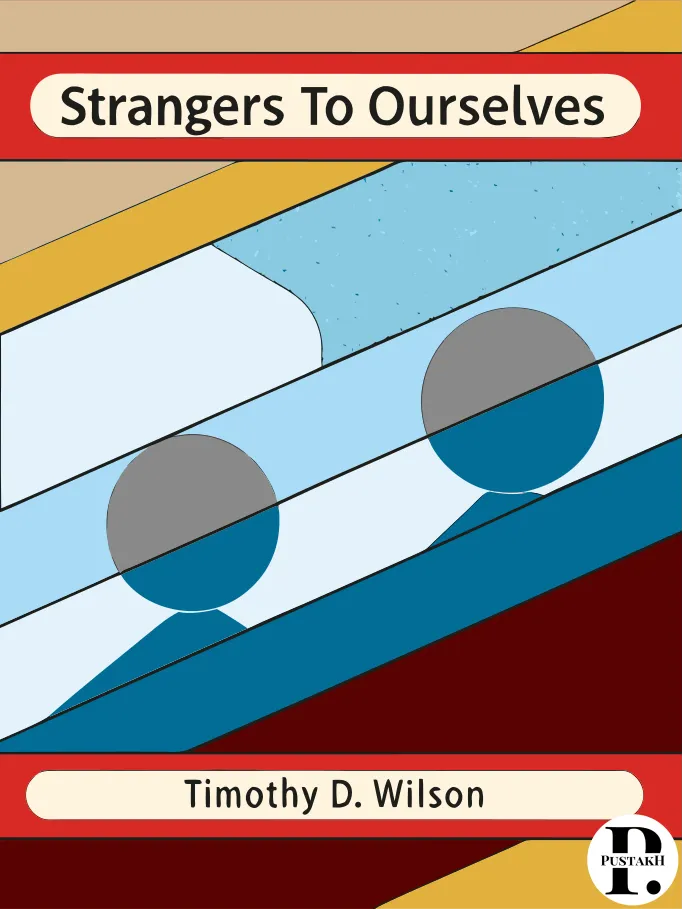
Strangers to Ourselves
by Timothy D. Wilson
Discovering the Adaptive Unconscious
10
Chapters
60+
Action steps
15
Minutes
PERSONALIZED
Action steps tailored to your goals in the Pustakh app
Preview — Chapter 01: Freud’s Genius, Freud’s Myopia
The idea that mental life extends beyond awareness marked a major turning point in understanding human behavior. Recognizing hidden mental processes challenged the notion that people are fully conscious and rational decision-makers, opening new ways to explain emotion, motivation, and action. The lasting contribution lies in acknowledging unconscious influence, not in the early explanations used to describe it. Initial models leaned heavily toward hidden conflicts, symbolic meanings, and buried emotional wounds. These ideas captured imagination but often relied more on interpretation than verifiable evidence. A critical distinction emerges between acknowledging unconscious processes and overdramatizing their content. Much of what operates outside awareness is not dark, repressed, or irrational. It is practical, efficient, and focused on navigating everyday life smoothly. Misunderstanding this distinction creates problems in personal growth. When unexplained behavior is automatically traced back to deep emotional damage, simpler explanations are missed. Habit, context, social cues, and automatic learning often play a far greater role than hidden trauma. Another important observation involves the human tendency to create stories. When people do not know why something happened, they generate explanations that feel emotionally satisfying. These explanations help maintain a sense of control and coherence, even when they are inaccurate. Letting go of overly symbolic explanations frees self-development from unnecessary complexity. A clearer view of unconscious processes allows attention to shift toward patterns that can be observed, tested, and adjusted, making change more practical and less mystical.
Keep reading on PustakhYou've read the opening. Here's where it gets practical.
The remaining 9 chapters, the full audio summary, and 60+ action steps personalized to your goals unlock with a free 3-day trial.
Start free 3-day trialNo credit card required · Cancel anytime
Strangers to Ourselves summary — FAQ
What will I get from the Strangers to Ourselves summary on Pustakh?
The key ideas of "Strangers to Ourselves" by Timothy D. Wilson, distilled into a roughly 15-minute read across 10 chapters, plus 60+ personalized action steps built around your goals and an optional audio version.
How long does the Strangers to Ourselves summary take?
About 15 minutes to read the full summary on Pustakh, or you can listen to the audio version.
Does Strangers to Ourselves have an audio summary?
Select Pustakh titles include audio summaries you can play in your browser, and new audio titles are added every week.
Is the Strangers to Ourselves summary free?
You can read the introduction to "Strangers to Ourselves" for free. Full access to every chapter and your personalized action steps is included with a Pustakh subscription. New accounts start with a free 3-day trial — no credit card required.
More Mindset & Psychology summaries
View all
60+ action steps from Strangers to Ourselves, tailored to your goals in Pustakh
- Tailored to your context and what you are working on
- Personalized steps per chapter, not generic checklists
- Read and listen on your schedule—then act with clarity
- Unlock the full library with a simple subscription
We'll set it up as we learn what you're working on.