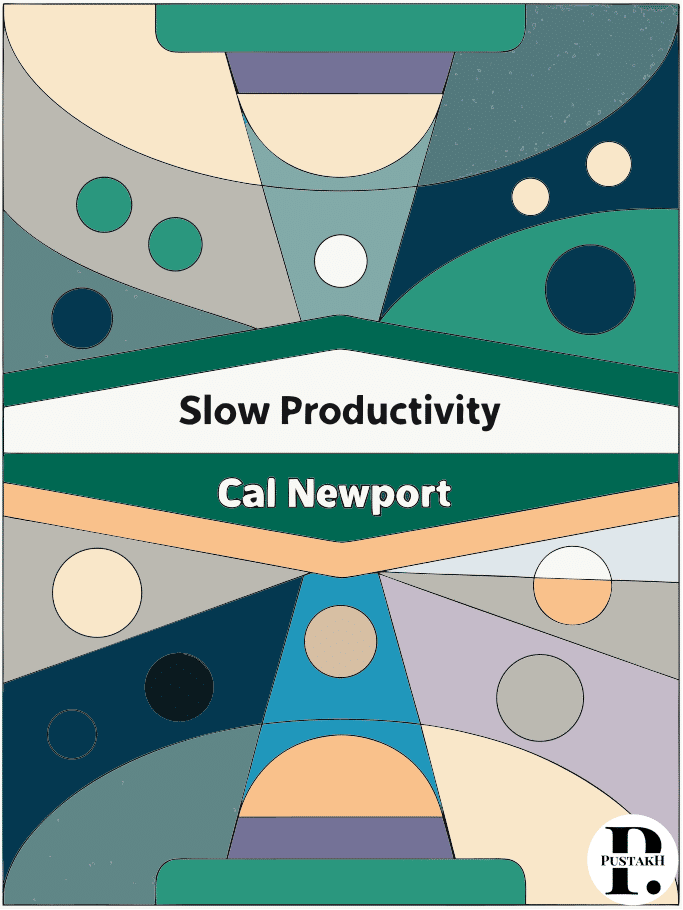
Slow Productivity
by Cal Newport
The Lost Art of Accomplishment Without Burnout
5
Chapters
41+
Action steps
11
Minutes
PERSONALIZED
Action steps tailored to your goals in the Pustakh app
Preview — Chapter 01: The Rise and Fall of Pseudo-Productivity
For decades, our culture has celebrated a form of productivity that values busyness over substance. The industrial era ingrained the idea that output could be measured by visible activity, and this logic seeped into the knowledge economy. Professionals are now judged by how many meetings they attend, how quickly they reply to emails, or how many hours they log at their desks. This creates an environment where everyone is hustling, but little of lasting value is actually being produced. The pressure to always look busy replaces the drive to do meaningful work. The flaw in pseudo-productivity is that it confuses motion with progress. People exhaust themselves with shallow tasks that provide short-term validation but fail to contribute to larger goals. Over time, this erodes creativity and passion. The system is unsustainable: burnout rises, and organizations lose the benefit of deep, thoughtful contributions. The constant need to perform busyness drains individuals of the focus required for real breakthroughs. What’s striking is how widespread this problem is. The digital age amplifies it, with endless notifications, Slack messages, and task trackers designed to keep us “on.” Instead of freeing us, technology has made it harder to slow down. Yet, amidst this environment, dissatisfaction is growing. Many feel they are working harder than ever but achieving less. This is the fall of pseudo-productivity - the recognition that the model simply doesn’t work. This makes clear that the old model is collapsing under its own weight. Organizations and individuals cannot sustain endless busyness without paying the price. The opportunity now lies in rejecting shallow measures of productivity and seeking a slower, more deliberate way of working. By understanding the rise and fall of pseudo-productivity, we are prepared to embrace a new framework that restores meaning, health, and accomplishment to our work lives.
Keep reading on PustakhYou've read the opening. Here's where it gets practical.
The remaining 4 chapters, the full audio summary, and 41+ action steps personalized to your goals unlock with a free 3-day trial.
Start free 3-day trialNo credit card required · Cancel anytime
Slow Productivity summary — FAQ
What will I get from the Slow Productivity summary on Pustakh?
The key ideas of "Slow Productivity" by Cal Newport, distilled into a roughly 15-minute read across 5 chapters, plus 41+ personalized action steps built around your goals and an optional audio version.
How long does the Slow Productivity summary take?
About 11 minutes to read the full summary on Pustakh, or you can listen to the audio version.
Does Slow Productivity have an audio summary?
Select Pustakh titles include audio summaries you can play in your browser, and new audio titles are added every week.
Is the Slow Productivity summary free?
You can read the introduction to "Slow Productivity" for free. Full access to every chapter and your personalized action steps is included with a Pustakh subscription. New accounts start with a free 3-day trial — no credit card required.
More Productivity & Time Management summaries
View all



41+ action steps from Slow Productivity, tailored to your goals in Pustakh
- Tailored to your context and what you are working on
- Personalized steps per chapter, not generic checklists
- Read and listen on your schedule—then act with clarity
- Unlock the full library with a simple subscription
We'll set it up as we learn what you're working on.