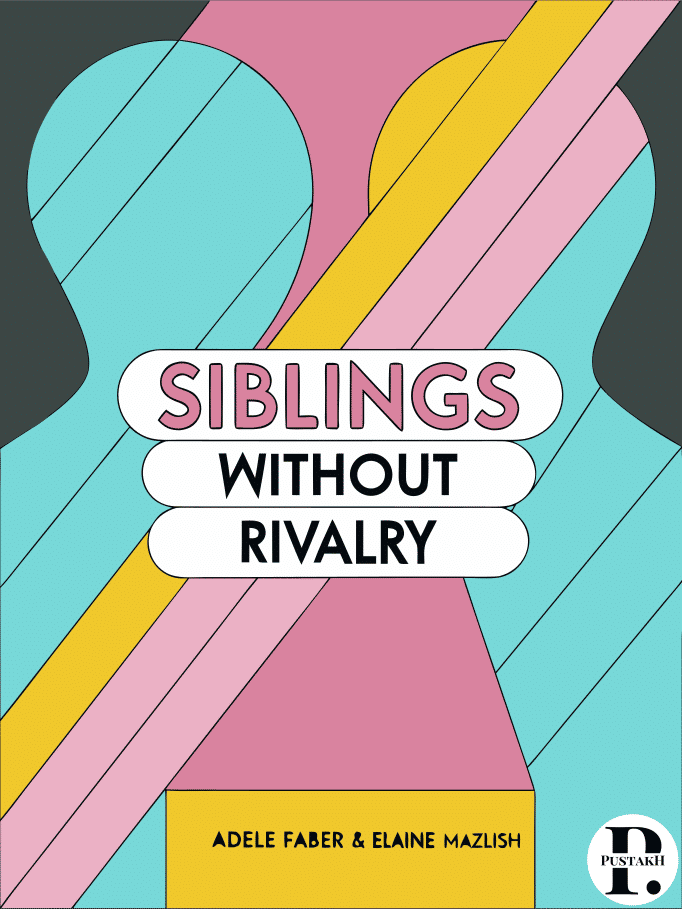
Siblings Without Rivalry
by Adele Faber & Elaine Mazlish
How to Help Your Children Live Together So You Can Live Too
7
Chapters
56+
Action steps
10
Minutes
PERSONALIZED
Action steps tailored to your goals in the Pustakh app
Preview — Chapter 01: Brothers and Sisters - Past and Present
The relationships between siblings often swing between closeness and conflict, shaped not only by personality but also by how adults respond to each child. Many families assume rivalry is inevitable, but deeper observation reveals that the emotional environment plays an enormous role in shaping how siblings relate. Children watch how attention is given, how mistakes are handled, and how differences are acknowledged. These moments form the emotional rules of the household. When each child is welcomed as unique rather than compared, the foundation for genuine connection begins to strengthen. Siblings aren’t naturally destined to get along. They learn from interactions - both painful and peaceful - which of their behaviors earn attention. Arguments often arise when children sense unevenness, whether real or perceived. Instead of labeling them as troublemakers or dismissing their reactions as overblown, families benefit from exploring what sits beneath the tension. Many conflicts are simply signals of unmet emotional needs, not signs of unkindness. Children often struggle to share space, attention, and parental approval. This isn’t selfishness - it’s survival instinct. When adults acknowledge these intense feelings instead of suppressing them, siblings discover healthier ways to articulate their frustrations. Emotional permission doesn’t increase conflict; it reduces the silent buildup that usually makes clashes explosive later. Families change over time, and each child experiences that evolution differently. Birth order, temperament, and timing shape how each child interprets fairness and affection. Understanding these shifting dynamics helps parents create a more compassionate rhythm within the home. When siblings notice that emotional needs aren’t ranked, but respected individually, rivalries loosen, and relationships soften naturally.
Keep reading on PustakhYou've read the opening. Here's where it gets practical.
The remaining 6 chapters, the full audio summary, and 56+ action steps personalized to your goals unlock with a free 3-day trial.
Start free 3-day trialNo credit card required · Cancel anytime
Siblings Without Rivalry summary — FAQ
What will I get from the Siblings Without Rivalry summary on Pustakh?
The key ideas of "Siblings Without Rivalry" by Adele Faber & Elaine Mazlish, distilled into a roughly 15-minute read across 7 chapters, plus 56+ personalized action steps built around your goals and an optional audio version.
How long does the Siblings Without Rivalry summary take?
About 10 minutes to read the full summary on Pustakh, or you can listen to the audio version.
Does Siblings Without Rivalry have an audio summary?
Select Pustakh titles include audio summaries you can play in your browser, and new audio titles are added every week.
Is the Siblings Without Rivalry summary free?
You can read the introduction to "Siblings Without Rivalry" for free. Full access to every chapter and your personalized action steps is included with a Pustakh subscription. New accounts start with a free 3-day trial — no credit card required.
More Parenting Essentials summaries
View all
Best Friends, Worst Enemies
by Michael Thompson, Catherine O’Neill Grace, & Lawrence J. Cohen
Brain-Body Parenting
by Mona Delahooke
Calm Parents, Happy Kids
by Laura Markham
Doing Life with Your Adult Children
by Jim Burns
Einstein Never Used Flash Cards
by Kathy Hirsh-Pasek, Roberta Michnick Golinkoff, Diane Eyer
Gentle Discipline
by Sarah Ockwell-Smith
56+ action steps from Siblings Without Rivalry, tailored to your goals in Pustakh
- Tailored to your context and what you are working on
- Personalized steps per chapter, not generic checklists
- Read and listen on your schedule—then act with clarity
- Unlock the full library with a simple subscription
We'll set it up as we learn what you're working on.