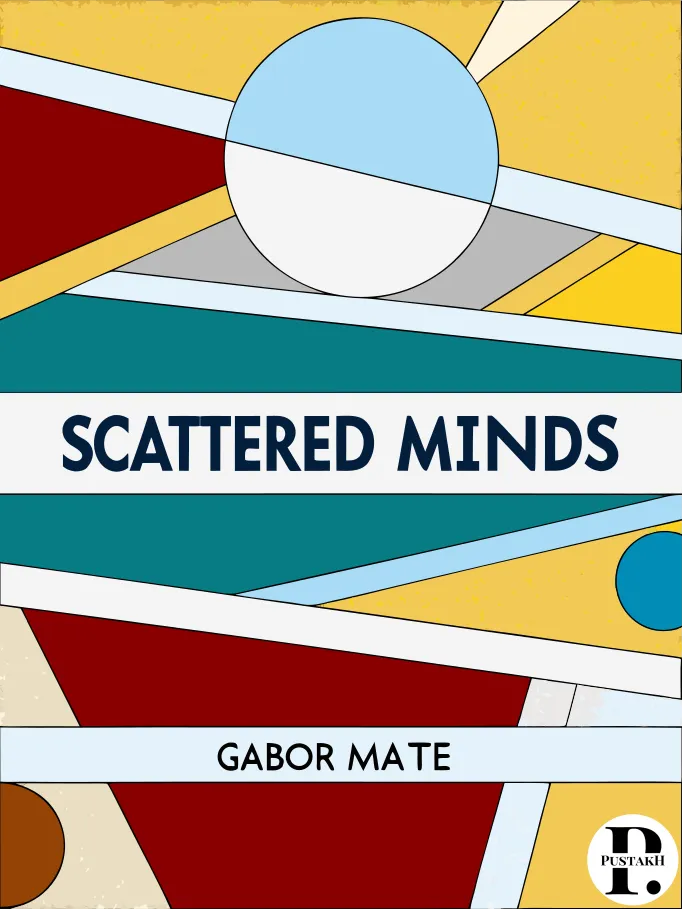
Scattered Minds
by Gabor Maté
The Origins and Healing of Attention Deficit Disorder
32
Chapters
229+
Action steps
16
Minutes
PERSONALIZED
Action steps tailored to your goals in the Pustakh app
Preview — Chapter 01: So Much Soup and Garbage Can
Attention functions less like a spotlight and more like a filtering system. The mind is constantly exposed to sounds, thoughts, sensations, and emotional cues. For focus to remain steady, irrelevant information must be screened out. When that filtering capacity becomes overwhelmed, everything arrives at once. Focus fragments not because of laziness or lack of intelligence, but because the brain is managing excessive input simultaneously. Distractibility is reframed as openness rather than deficiency. Instead of being closed off, the mind remains highly receptive to everything in its environment. This explains why scattered focus often coexists with creativity, sensitivity, and emotional depth. The same openness that makes concentration difficult also allows for imagination and intuitive awareness. This pattern is traced back to early emotional conditions. When surroundings are unpredictable or emotionally demanding, the nervous system remains alert. Attention disperses as a way to scan for safety. Over time, this becomes automatic. Understanding this dynamic replaces frustration with clarity. Focus difficulties stop feeling random and start making sense as learned responses. Calm emerges not by demanding concentration, but by reducing overwhelm. As the internal environment settles, attention naturally gathers again.
Keep reading on PustakhYou've read the opening. Here's where it gets practical.
The remaining 31 chapters, the full audio summary, and 229+ action steps personalized to your goals unlock with a free 3-day trial.
Start free 3-day trialNo credit card required · Cancel anytime
Scattered Minds summary — FAQ
What will I get from the Scattered Minds summary on Pustakh?
The key ideas of "Scattered Minds" by Gabor Maté, distilled into a roughly 15-minute read across 32 chapters, plus 229+ personalized action steps built around your goals and an optional audio version.
How long does the Scattered Minds summary take?
About 16 minutes to read the full summary on Pustakh, or you can listen to the audio version.
Does Scattered Minds have an audio summary?
Select Pustakh titles include audio summaries you can play in your browser, and new audio titles are added every week.
Is the Scattered Minds summary free?
You can read the introduction to "Scattered Minds" for free. Full access to every chapter and your personalized action steps is included with a Pustakh subscription. New accounts start with a free 3-day trial — no credit card required.
More Healing & Recovery summaries
View all
Adult Children of Emotionally Immature Parents
by Lindsay C. Gibson

Are You Mad At Me?
by Meg Josephson

Broken Heart, Shared Heart, Healing Heart
by Barbara Allen

Can't Even
by Anne Helen Petersen
Codependent No More
by Melody Beattie
Cured
by Jeffrey Rediger
229+ action steps from Scattered Minds, tailored to your goals in Pustakh
- Tailored to your context and what you are working on
- Personalized steps per chapter, not generic checklists
- Read and listen on your schedule—then act with clarity
- Unlock the full library with a simple subscription
We'll set it up as we learn what you're working on.