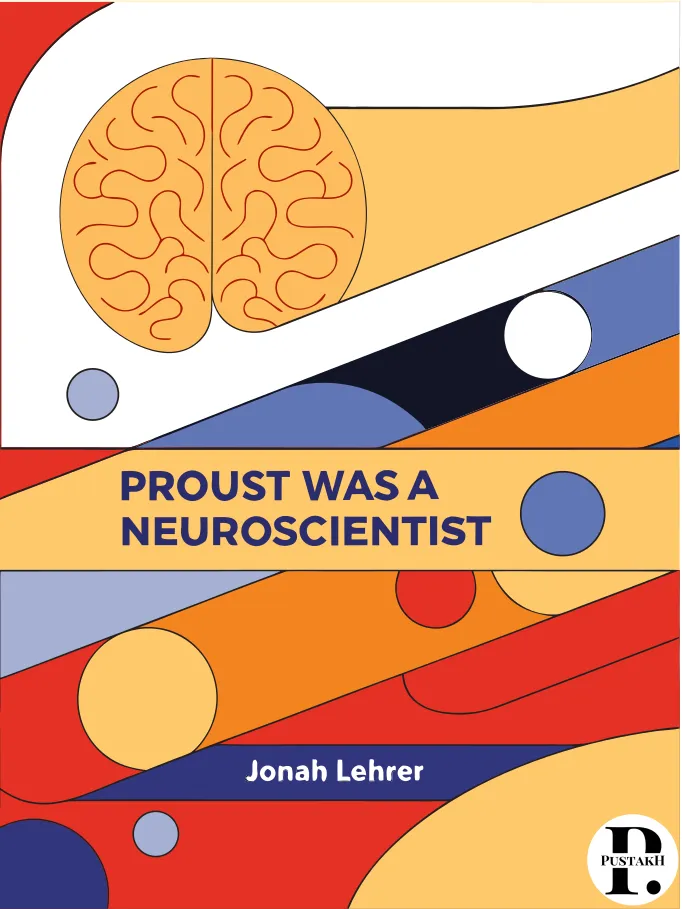
Proust Was a Neuroscientist
by Jonah Lehrer
An Exploration of How Great Artists Uncovered Deep Truths about the Mind long before Science caught up
8
Chapters
75+
Action steps
18
Minutes
PERSONALIZED
Action steps tailored to your goals in the Pustakh app
Preview — Chapter 01: Walt Whitman - The Substance of Feeling
Spending time with Whitman feels like stepping into a sensory awakening. Every line he ever wrote pulses with an understanding that the mind isn’t separated from the body - it lives inside it, breathes with it, reacts through it. His poetry insists that emotions are not abstract clouds floating around your consciousness, but physical forces that move through muscle, heartbeat, breath, and sensation. In highlighting this, Whitman essentially discovered something neuroscience would confirm generations later: thought and feeling don’t operate independently; they are deeply entangled in the body’s rhythms. Whitman’s great insight is that the self is not a spectator observing the world - it is a lived experience continuously shaped by the senses. When you read his work, you can almost feel your awareness shift from your thoughts to your breath, your skin, your physical presence in the moment. He reminds you that being human is not an intellectual act but a full-bodied encounter with reality. And once you see it, you start noticing how the body sends emotional signals long before the mind forms explanations. A tightening chest before anxiety, a burst of warmth during excitement, a sinking sensation during sadness - these are not metaphors, but the biological beginnings of emotion making themselves known. What’s compelling is how Whitman’s way of seeing encourages you to trust these inner signals rather than suppress them. In everyday life, it’s easy to ignore the body’s cues and live as if feelings should be controlled or minimized. Whitman flips this perspective entirely. He suggests that sensation is wisdom, that emotion contains clarity, and that understanding the mind begins with noticing how experience lands in the body. Suddenly your reactions - a quickened pulse, a shift in posture, a sudden sense of grounding - start to feel like messages rather than distractions. Walking through Whitman’s lens also changes how you interact with the world around you. Conversations feel richer because you’re attuned not only to words but to tone, energy, and subtle emotional beats. Nature becomes more vivid because you’re noticing how sunlight feels on your skin rather than simply labeling it as “warm.” Eating, listening, moving - all become more alive because they’re no longer background noise but the foundation of how your mind makes meaning. By the time you leave Whitman’s realm, you’re carrying a new understanding: to feel is to know. The mind is not floating above the body like a distant observer but woven through every heartbeat and sensory impression. Emotion isn’t an interruption to thought; it is thought’s most ancient partner, guiding perception long before logic arrives.
Keep reading on PustakhYou've read the opening. Here's where it gets practical.
The remaining 7 chapters, the full audio summary, and 75+ action steps personalized to your goals unlock with a free 3-day trial.
Start free 3-day trialNo credit card required · Cancel anytime
Proust Was a Neuroscientist summary — FAQ
What will I get from the Proust Was a Neuroscientist summary on Pustakh?
The key ideas of "Proust Was a Neuroscientist" by Jonah Lehrer, distilled into a roughly 15-minute read across 8 chapters, plus 75+ personalized action steps built around your goals and an optional audio version.
How long does the Proust Was a Neuroscientist summary take?
About 18 minutes to read the full summary on Pustakh, or you can listen to the audio version.
Does Proust Was a Neuroscientist have an audio summary?
Select Pustakh titles include audio summaries you can play in your browser, and new audio titles are added every week.
Is the Proust Was a Neuroscientist summary free?
You can read the introduction to "Proust Was a Neuroscientist" for free. Full access to every chapter and your personalized action steps is included with a Pustakh subscription. New accounts start with a free 3-day trial — no credit card required.
More Creativity & Innovation summaries
View all


75+ action steps from Proust Was a Neuroscientist, tailored to your goals in Pustakh
- Tailored to your context and what you are working on
- Personalized steps per chapter, not generic checklists
- Read and listen on your schedule—then act with clarity
- Unlock the full library with a simple subscription
We'll set it up as we learn what you're working on.