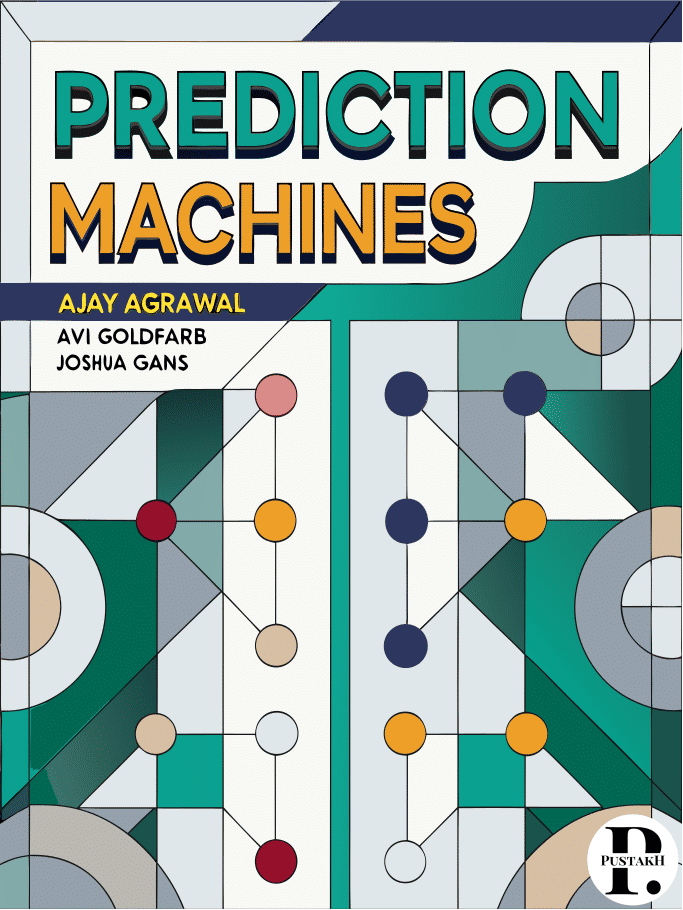
Prediction Machines
by Ajay Agrawal, Avi Goldfarb, & Joshua Gans
The Simple Economics of Artificial Intelligence
20
Chapters
145+
Action steps
15
Minutes
PERSONALIZED
Action steps tailored to your goals in the Pustakh app
Preview — Chapter 01: Cheap Changes Everything
When the price of a core input collapses, the entire value chain reorganizes around it. Cheap prediction is treated as such an input, comparable to how cheap electricity or cheap computing power reshaped industries in earlier eras. Lower costs do not simply improve existing processes. They unlock entirely new ways of operating that were previously impractical or impossible. Attention shifts to second-order effects. The real impact comes not from better forecasts, but from how decisions are redesigned around them. Tasks that once required human intuition can now be automated or augmented. Bottlenecks move elsewhere, often toward judgment and coordination. This explains why organizations that simply bolt AI onto existing workflows see limited gains, while those that rethink processes achieve outsized results. The discussion emphasizes creativity over automation. Cheap prediction enables experimentation at scale. Ideas can be tested rapidly, feedback loops tighten, and learning accelerates. Competitive advantage shifts toward those who can imagine new combinations of prediction, judgment, and action. Innovation becomes less about owning technology and more about redesigning systems intelligently.
Keep reading on PustakhYou've read the opening. Here's where it gets practical.
The remaining 19 chapters, the full audio summary, and 145+ action steps personalized to your goals unlock with a free 3-day trial.
Start free 3-day trialNo credit card required · Cancel anytime
Prediction Machines summary — FAQ
What will I get from the Prediction Machines summary on Pustakh?
The key ideas of "Prediction Machines" by Ajay Agrawal, Avi Goldfarb, & Joshua Gans, distilled into a roughly 15-minute read across 20 chapters, plus 145+ personalized action steps built around your goals and an optional audio version.
How long does the Prediction Machines summary take?
About 15 minutes to read the full summary on Pustakh, or you can listen to the audio version.
Does Prediction Machines have an audio summary?
Select Pustakh titles include audio summaries you can play in your browser, and new audio titles are added every week.
Is the Prediction Machines summary free?
You can read the introduction to "Prediction Machines" for free. Full access to every chapter and your personalized action steps is included with a Pustakh subscription. New accounts start with a free 3-day trial — no credit card required.
More Career & Business summaries
View all
145+ action steps from Prediction Machines, tailored to your goals in Pustakh
- Tailored to your context and what you are working on
- Personalized steps per chapter, not generic checklists
- Read and listen on your schedule—then act with clarity
- Unlock the full library with a simple subscription
We'll set it up as we learn what you're working on.