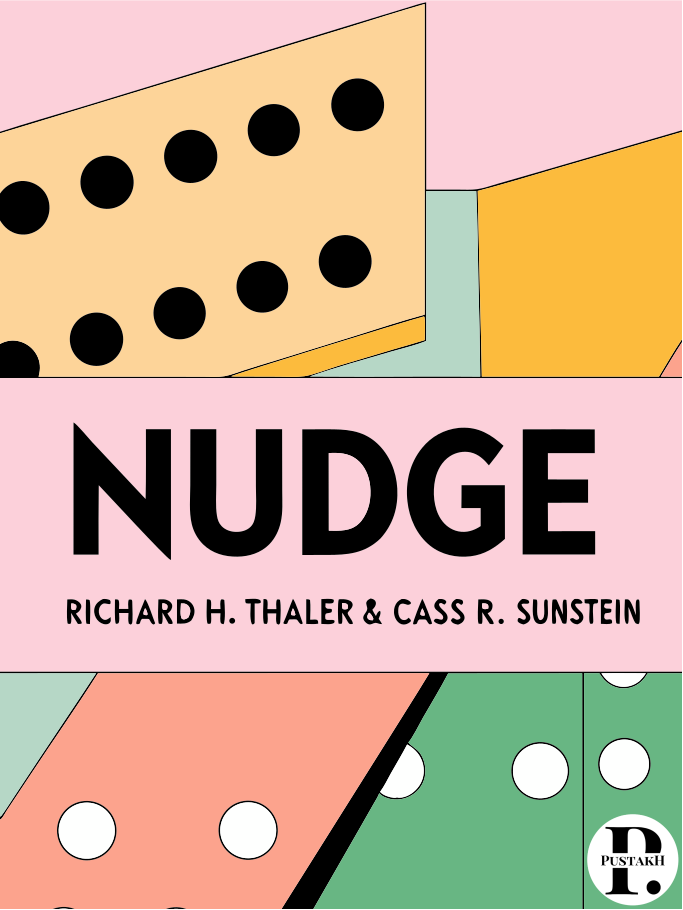
Nudge
by Richard H. Thaler & Cass R. Sunstein
Improving Decisions about Health, Wealth, and Happiness
18
Chapters
149+
Action steps
20
Minutes
PERSONALIZED
Action steps tailored to your goals in the Pustakh app
Preview — Chapter 01: Biases and Blunders
The journey into decision-making begins with the biases and errors that trip people up. Humans like to believe they see the world clearly, but systematic mistakes distort judgments. Anchoring is one such bias - when people are given an arbitrary number, even irrelevant, their estimates of unrelated things are pulled toward it. Overconfidence leads individuals to believe they know more than they do, fueling poor investments or risky choices. Availability bias causes people to overweight vivid events like shark attacks or airplane crashes while underestimating mundane but deadly risks like heart disease. These blunders are not random noise; they are consistent patterns of error that lead to predictable outcomes . That predictability is why nudges can work so effectively. For example, people will often choose whatever option is the default, not because it is rationally best, but because it requires less effort. Similarly, framing outcomes in terms of losses rather than gains alters decisions dramatically - people take fewer risks to avoid losing than to achieve equivalent gains. The implications are profound: without safeguards, these biases can wreak havoc in personal finance, health decisions, and public policy. Retirement accounts may remain underfunded, individuals may avoid life-saving screenings, and societies may fail to prepare for slow-moving risks like climate change. Recognizing these blind spots is the first step toward designing systems that compensate for them . What emerges is a recognition that human thinking is not hopelessly flawed, but it is limited. By anticipating those limits, choice architects can create conditions where people are less likely to trip over the same mental hurdles again and again. Biases and blunders are not merely curiosities of psychology - they are the foundation for why nudging is both possible and necessary .
Keep reading on PustakhYou've read the opening. Here's where it gets practical.
The remaining 17 chapters, the full audio summary, and 149+ action steps personalized to your goals unlock with a free 3-day trial.
Start free 3-day trialNo credit card required · Cancel anytime
Nudge summary — FAQ
What will I get from the Nudge summary on Pustakh?
The key ideas of "Nudge" by Richard H. Thaler & Cass R. Sunstein, distilled into a roughly 15-minute read across 18 chapters, plus 149+ personalized action steps built around your goals and an optional audio version.
How long does the Nudge summary take?
About 20 minutes to read the full summary on Pustakh, or you can listen to the audio version.
Does Nudge have an audio summary?
Select Pustakh titles include audio summaries you can play in your browser, and new audio titles are added every week.
Is the Nudge summary free?
You can read the introduction to "Nudge" for free. Full access to every chapter and your personalized action steps is included with a Pustakh subscription. New accounts start with a free 3-day trial — no credit card required.
More Mindset & Psychology summaries
View all
149+ action steps from Nudge, tailored to your goals in Pustakh
- Tailored to your context and what you are working on
- Personalized steps per chapter, not generic checklists
- Read and listen on your schedule—then act with clarity
- Unlock the full library with a simple subscription
We'll set it up as we learn what you're working on.