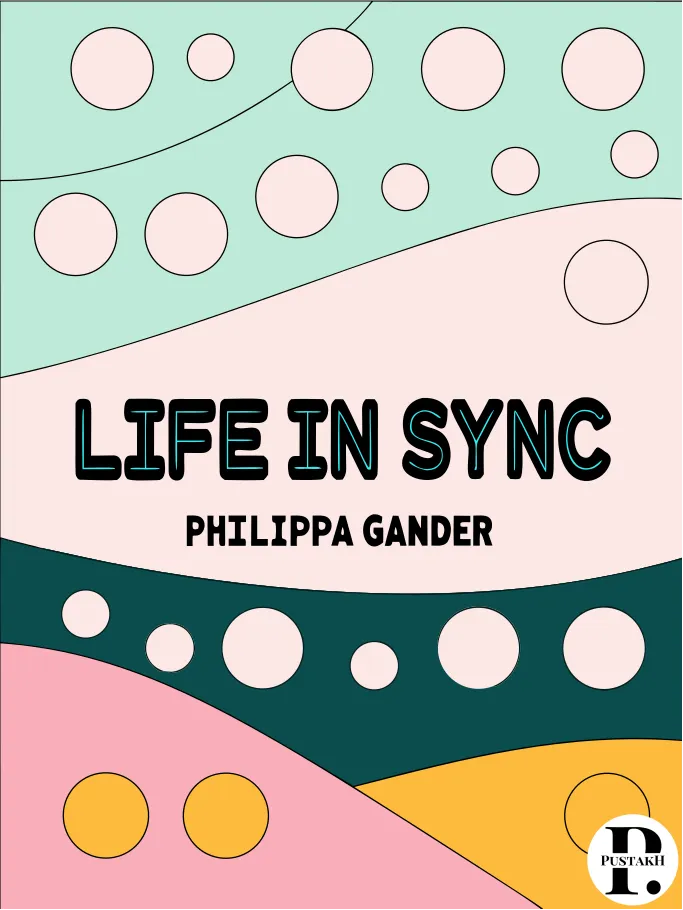
Life in Sync
by Philippa Gander
The Science of Internal Clocks and How We’re Disrupting Them
6
Chapters
47+
Action steps
12
Minutes
PERSONALIZED
Action steps tailored to your goals in the Pustakh app
Preview — Chapter 01: Living in Earth’s Geophysical Cycles
Every organism on Earth evolved under the same pattern - a 24-hour cycle of light and darkness. This rhythm is not just an environmental feature; it is the foundation of life itself. The turning of the planet dictates when creatures hunt, sleep, migrate, and reproduce. Humans, though more complex, are no different. Our bodies are deeply wired to the sun, the moon, and the rotation of the Earth - even when we pretend we’ve outgrown them. Before electricity, our ancestors woke with dawn and rested with dusk. Meals, work, and social life all followed the sun’s arc. But modernity disrupted that perfect synchronization. We’ve stretched daylight artificially, condensed sleep, and blurred the line between night and day. This disconnection from nature’s geophysical cycles has led to widespread “social jet lag” - the mismatch between our internal clocks and the external demands of society. Inside us, countless tiny clocks - called circadian oscillators - tick away in harmony, coordinated by a master clock in the brain’s hypothalamus. This master clock regulates sleep, metabolism, temperature, and hormone release. When we align our activities with its rhythm, our bodies perform optimally. But when we ignore it - staying up too late, skipping sunlight, eating at odd hours - these systems fall out of sync. The consequences show up as irritability, fatigue, brain fog, and metabolic imbalance. Reconnecting with Earth’s natural timing means more than going to bed early; it means rebuilding a relationship with light and dark. Morning sunlight, regular meal times, and consistent sleep are not just healthy habits - they’re biological anchors. Just as tides respond to the moon, our bodies respond to timing cues known as zeitgebers - signals like daylight, temperature, and even social interaction that help reset our internal clock daily. The more consistently we provide these cues, the stronger and healthier our rhythms become. In truth, we are not separate from the planet’s rhythm - we are part of it. Remembering that connection allows us to step out of constant fatigue and into natural flow. Living in sync with Earth isn’t nostalgia - it’s biology reclaiming its rightful rhythm.
Keep reading on PustakhYou've read the opening. Here's where it gets practical.
The remaining 5 chapters, the full audio summary, and 47+ action steps personalized to your goals unlock with a free 3-day trial.
Start free 3-day trialNo credit card required · Cancel anytime
Life in Sync summary — FAQ
What will I get from the Life in Sync summary on Pustakh?
The key ideas of "Life in Sync" by Philippa Gander, distilled into a roughly 15-minute read across 6 chapters, plus 47+ personalized action steps built around your goals and an optional audio version.
How long does the Life in Sync summary take?
About 12 minutes to read the full summary on Pustakh, or you can listen to the audio version.
Does Life in Sync have an audio summary?
Select Pustakh titles include audio summaries you can play in your browser, and new audio titles are added every week.
Is the Life in Sync summary free?
You can read the introduction to "Life in Sync" for free. Full access to every chapter and your personalized action steps is included with a Pustakh subscription. New accounts start with a free 3-day trial — no credit card required.
More Health & Wellness summaries
View all
47+ action steps from Life in Sync, tailored to your goals in Pustakh
- Tailored to your context and what you are working on
- Personalized steps per chapter, not generic checklists
- Read and listen on your schedule—then act with clarity
- Unlock the full library with a simple subscription
We'll set it up as we learn what you're working on.