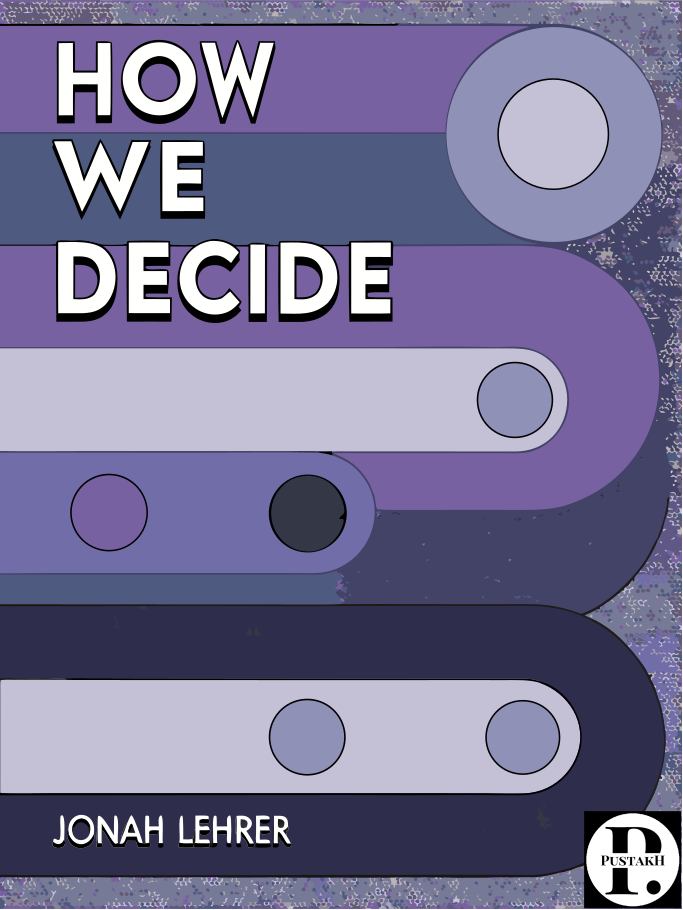
How We Decide
by Jonah Lehrer
How to Use the Unexpected Discoveries of Neuroscience
8
Chapters
71+
Action steps
15
Minutes
PERSONALIZED
Action steps tailored to your goals in the Pustakh app
Preview — Chapter 01: The Quarterback in the Pocket
Imagine being thrust into a moment where everything depends on a quick decision - no time to think, no space to pause, just instinct firing faster than conscious thought. That’s what elite athletes experience, and it becomes a powerful example of how the brain blends emotion and intuition to make high-stakes decisions almost instantly. When you explore how a quarterback processes the chaos of the field in seconds, you begin understanding the hidden sophistication of human intuition. Intuition isn’t a mysterious feeling; it’s the result of thousands of patterns your brain has internalized over time. You start realizing how often your brain makes predictions without your awareness. The quarterback doesn’t consciously evaluate the speed of every defender or the angle of every receiver - his brain has already built internal models from years of training. The same thing happens in your own life when you make decisions that “feel right” without immediately knowing why. That gut feeling is your brain performing calculations beneath conscious awareness. But intuition has limits. When you're inexperienced or emotionally overwhelmed, your instincts can mislead you. The quarterback becomes reliable only because he’s been exposed to countless scenarios, successes, and mistakes. You develop intuition the same way - by practicing, reflecting, and engaging deeply with your experiences. Once you understand this, you stop dismissing your gut as random and start respecting it as data collected over time. You also see how emotion plays an essential role. Rather than being the enemy of sound thinking, emotion helps guide instinct and sharpen attention. It pushes the brain to notice subtle details, react quickly, and commit to action without hesitation. When you’re calm and trained, emotions enhance intuition. When you’re stressed or insecure, they distort it. This awareness alone can transform your ability to make decisions under pressure. As this clarity forms, you begin trusting yourself more - and questioning yourself with greater intelligence. You learn that quick thinking isn’t reckless; it’s a skill built through deliberate exposure, honest feedback, and emotional regulation.
Keep reading on PustakhYou've read the opening. Here's where it gets practical.
The remaining 7 chapters, the full audio summary, and 71+ action steps personalized to your goals unlock with a free 3-day trial.
Start free 3-day trialNo credit card required · Cancel anytime
How We Decide summary — FAQ
What will I get from the How We Decide summary on Pustakh?
The key ideas of "How We Decide" by Jonah Lehrer, distilled into a roughly 15-minute read across 8 chapters, plus 71+ personalized action steps built around your goals and an optional audio version.
How long does the How We Decide summary take?
About 15 minutes to read the full summary on Pustakh, or you can listen to the audio version.
Does How We Decide have an audio summary?
Select Pustakh titles include audio summaries you can play in your browser, and new audio titles are added every week.
Is the How We Decide summary free?
You can read the introduction to "How We Decide" for free. Full access to every chapter and your personalized action steps is included with a Pustakh subscription. New accounts start with a free 3-day trial — no credit card required.
More Mindset & Psychology summaries
View all
71+ action steps from How We Decide, tailored to your goals in Pustakh
- Tailored to your context and what you are working on
- Personalized steps per chapter, not generic checklists
- Read and listen on your schedule—then act with clarity
- Unlock the full library with a simple subscription
We'll set it up as we learn what you're working on.