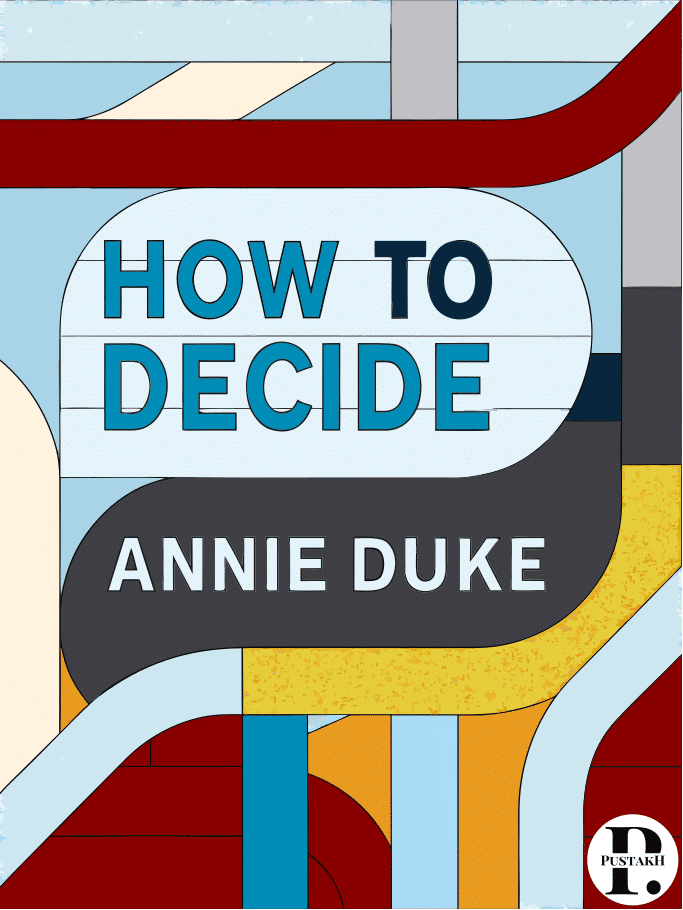
How to Decide
by Annie Duke
Simple Tools for Making Better Choices
9
Chapters
55+
Action steps
10
Minutes
PERSONALIZED
Action steps tailored to your goals in the Pustakh app
Preview — Chapter 01: Resulting
This portion exposes one of the most common decision traps: judging choices purely by their outcomes. When something turns out well, we assume the decision behind it was good. When it turns out poorly, we assume the decision was flawed. This feels intuitive, but it ignores the role of randomness, timing, and external forces. The problem with outcome-based judgment is that it trains the wrong lessons. If luck favors you, you may repeat poor reasoning with confidence. If luck turns against you, you may abandon solid strategies prematurely. Resulting blurs the line between skill and chance , making it harder to improve future choices. This portion encourages separating what you controlled from what you could not. A decision should be evaluated based on the information available at the time, the logic applied, and the alternatives considered. Outcomes are data, not verdicts. They inform the process, but they do not define its quality. There is also an emotional layer here. Humans are wired to feel regret when outcomes disappoint us. That feeling can be useful if it leads to better reasoning, but destructive if it leads to self-blame. By decoupling decisions from results, regret becomes feedback rather than punishment. This allows you to stay engaged with uncertainty without becoming paralyzed by fear of being wrong.
Keep reading on PustakhYou've read the opening. Here's where it gets practical.
The remaining 8 chapters, the full audio summary, and 55+ action steps personalized to your goals unlock with a free 3-day trial.
Start free 3-day trialNo credit card required · Cancel anytime
How to Decide summary — FAQ
What will I get from the How to Decide summary on Pustakh?
The key ideas of "How to Decide" by Annie Duke, distilled into a roughly 15-minute read across 9 chapters, plus 55+ personalized action steps built around your goals and an optional audio version.
How long does the How to Decide summary take?
About 10 minutes to read the full summary on Pustakh, or you can listen to the audio version.
Does How to Decide have an audio summary?
Select Pustakh titles include audio summaries you can play in your browser, and new audio titles are added every week.
Is the How to Decide summary free?
You can read the introduction to "How to Decide" for free. Full access to every chapter and your personalized action steps is included with a Pustakh subscription. New accounts start with a free 3-day trial — no credit card required.
More Mindset & Psychology summaries
View all
55+ action steps from How to Decide, tailored to your goals in Pustakh
- Tailored to your context and what you are working on
- Personalized steps per chapter, not generic checklists
- Read and listen on your schedule—then act with clarity
- Unlock the full library with a simple subscription
We'll set it up as we learn what you're working on.