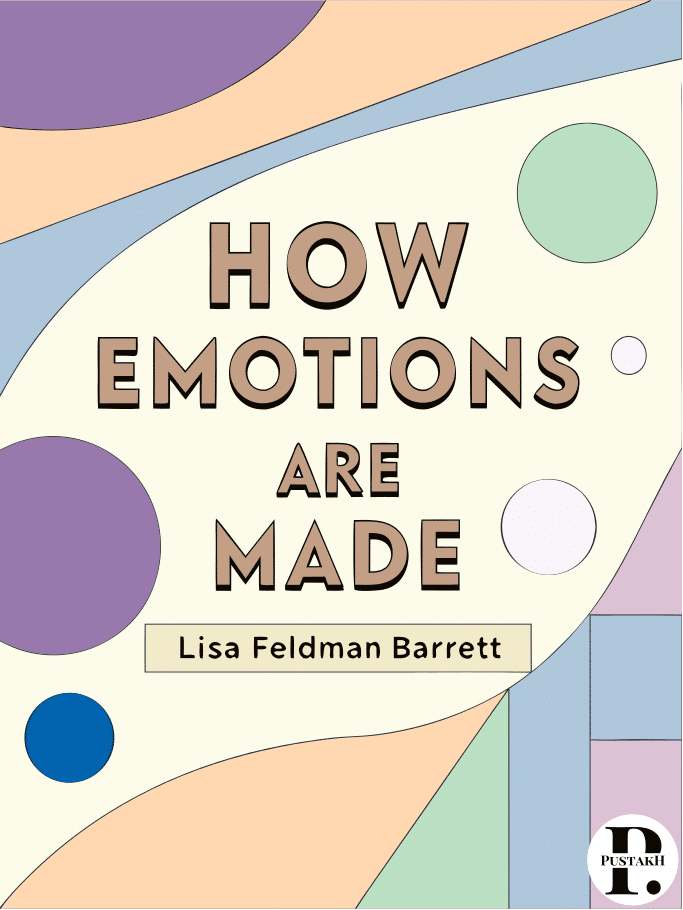
How Emotions Are Made
by Lisa Feldman Barrett
The Secret Life of the Brain
13
Chapters
74+
Action steps
15
Minutes
PERSONALIZED
Action steps tailored to your goals in the Pustakh app
Preview — Chapter 01: The Search for Emotion’s "Fingerprints"
For decades, scientists searched for reliable biological markers that could definitively identify emotions. Specific facial expressions, bodily responses, and neural patterns were expected to act like fingerprints, each one uniquely tied to a particular feeling. The assumption was that emotions could be objectively measured if the right signal was found. Large-scale studies challenged that expectation. The same emotion showed up with different physiological patterns across people and situations. Conversely, the same bodily patterns appeared in very different emotional experiences. Smiles did not always signal happiness. Frowns did not always mean anger. Context consistently changed meaning. This variability was not noise. It was the data. The brain does not rely on fixed emotional programs. Instead, it adapts constantly, using bodily sensations in flexible ways depending on goals and circumstances. The failure to find fingerprints revealed something deeper. Emotions are not located in specific regions or responses. They emerge from distributed processes working together. When scientists stopped searching for emotional essences, a more accurate picture began to form. The takeaway reshapes expectations. Emotional experiences cannot be decoded by reading faces or scanning bodies in isolation. Meaning arises from interpretation, not from signals alone.
Keep reading on PustakhYou've read the opening. Here's where it gets practical.
The remaining 12 chapters, the full audio summary, and 74+ action steps personalized to your goals unlock with a free 3-day trial.
Start free 3-day trialNo credit card required · Cancel anytime
How Emotions Are Made summary — FAQ
What will I get from the How Emotions Are Made summary on Pustakh?
The key ideas of "How Emotions Are Made" by Lisa Feldman Barrett, distilled into a roughly 15-minute read across 13 chapters, plus 74+ personalized action steps built around your goals and an optional audio version.
How long does the How Emotions Are Made summary take?
About 15 minutes to read the full summary on Pustakh, or you can listen to the audio version.
Does How Emotions Are Made have an audio summary?
Select Pustakh titles include audio summaries you can play in your browser, and new audio titles are added every week.
Is the How Emotions Are Made summary free?
You can read the introduction to "How Emotions Are Made" for free. Full access to every chapter and your personalized action steps is included with a Pustakh subscription. New accounts start with a free 3-day trial — no credit card required.
More Mindset & Psychology summaries
View all
74+ action steps from How Emotions Are Made, tailored to your goals in Pustakh
- Tailored to your context and what you are working on
- Personalized steps per chapter, not generic checklists
- Read and listen on your schedule—then act with clarity
- Unlock the full library with a simple subscription
We'll set it up as we learn what you're working on.