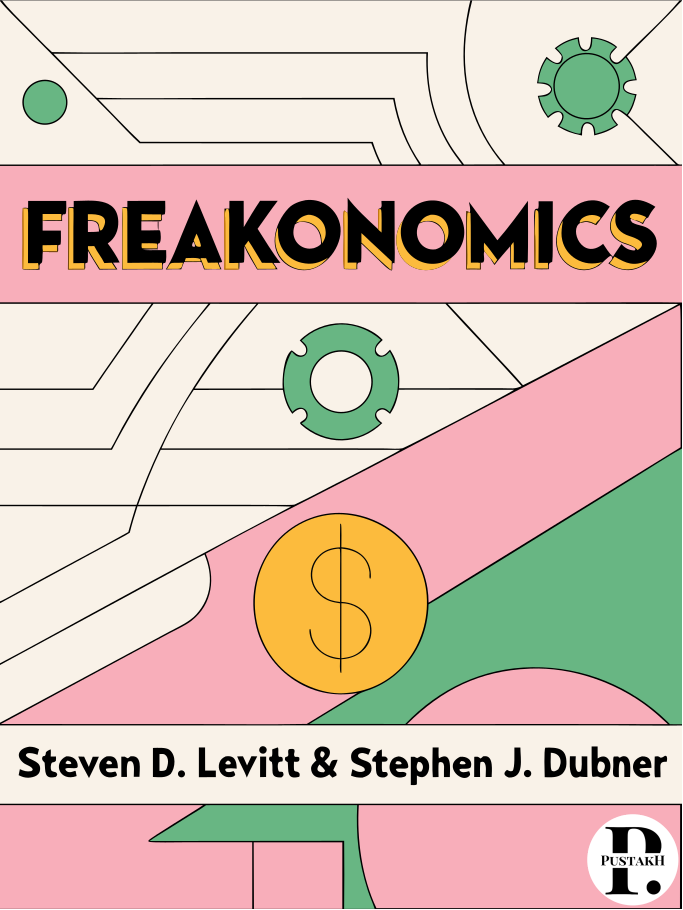
Freakonomics
by Steven D. Levitt & Stephen J. Dubner
A Rogue Economist Explores the Hidden Side of Everything
5
Chapters
39+
Action steps
10
Minutes
PERSONALIZED
Action steps tailored to your goals in the Pustakh app
Preview — Chapter 01: What Do Schoolteachers and Sumo Wrestlers Have in Common?
At first glance, teachers and sumo wrestlers couldn’t be more different - one shaping young minds, the other mastering an ancient sport. But look closer, and both exist inside systems where performance is rewarded and failure is punished. In that environment, the temptation to cheat quietly grows. The common thread isn’t profession; it’s incentives. When people are measured by results, some will inevitably manipulate the system to survive. Incentives are powerful because they tap into self-interest. When teachers are evaluated solely on student test scores, a few may inflate numbers to protect their jobs. When sumo wrestlers face demotion after a loss, they might throw or fix matches to preserve rank. Neither act is moral, but both are predictable once incentives are understood. Cheating doesn’t happen because people are bad - it happens because systems create conditions where cheating pays. This observation flips conventional morality upside down. Instead of assuming wrongdoing comes from character flaws, it shows how behavior adapts to structure. The lesson is that incentives can backfire when designed without awareness of human psychology. A reward meant to inspire honesty can just as easily inspire deceit. But this insight isn’t cynical - it’s clarifying. By identifying how people respond to incentives, you can design systems that align honesty with self-interest. The same logic applies to workplaces, politics, education, and even relationships. When incentives are transparent, fairness and accountability flourish. When they’re hidden or unfair, manipulation spreads quietly. Once you start seeing incentives as the real engine of action, human behavior stops feeling random - it becomes logical, even when it’s messy.
Keep reading on PustakhYou've read the opening. Here's where it gets practical.
The remaining 4 chapters, the full audio summary, and 39+ action steps personalized to your goals unlock with a free 3-day trial.
Start free 3-day trialNo credit card required · Cancel anytime
Freakonomics summary — FAQ
What will I get from the Freakonomics summary on Pustakh?
The key ideas of "Freakonomics" by Steven D. Levitt & Stephen J. Dubner, distilled into a roughly 15-minute read across 5 chapters, plus 39+ personalized action steps built around your goals and an optional audio version.
How long does the Freakonomics summary take?
About 10 minutes to read the full summary on Pustakh, or you can listen to the audio version.
Does Freakonomics have an audio summary?
Select Pustakh titles include audio summaries you can play in your browser, and new audio titles are added every week.
Is the Freakonomics summary free?
You can read the introduction to "Freakonomics" for free. Full access to every chapter and your personalized action steps is included with a Pustakh subscription. New accounts start with a free 3-day trial — no credit card required.
More Learning & Skill Development summaries
View all
12 Books That Changed the World
by Melvyn Bragg
21 Lessons for the 21st Century
by Yuval Noah Harari
Actionable Gamification
by Yu-kai Chou
A Mind for Numbers
by Barbara Oakley
A Short History of Nearly Everything
by Bill Bryson
Build, Don’t Talk
by Raj Shamani
39+ action steps from Freakonomics, tailored to your goals in Pustakh
- Tailored to your context and what you are working on
- Personalized steps per chapter, not generic checklists
- Read and listen on your schedule—then act with clarity
- Unlock the full library with a simple subscription
We'll set it up as we learn what you're working on.