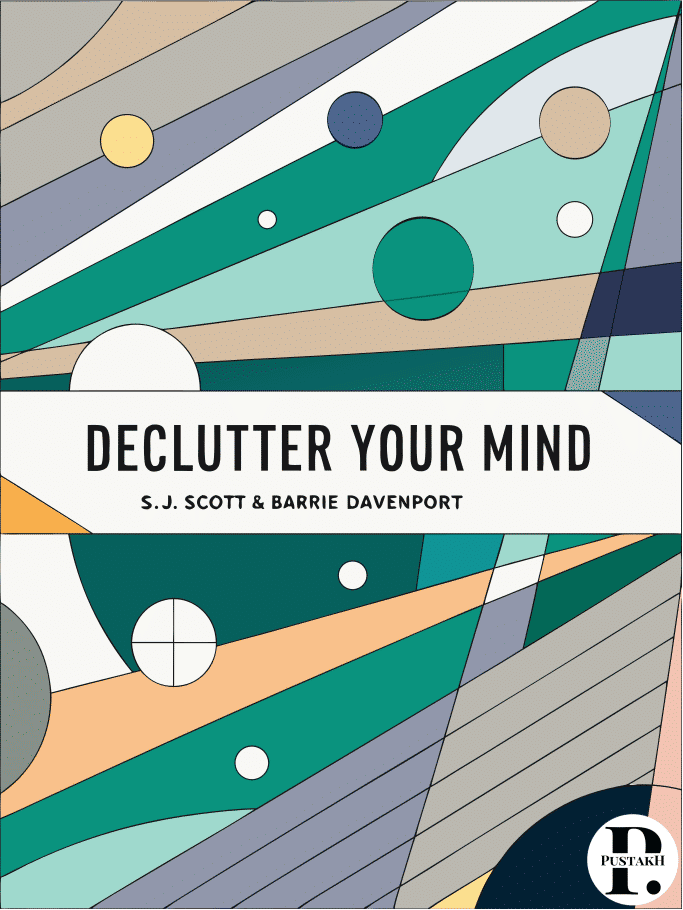
Declutter Your Mind
by S.J. Scott & Barrie Davenport
How to Stop Worrying, Relieve Anxiety, and Eliminate Negative Thinking
4
Chapters
39+
Action steps
11
Minutes
PERSONALIZED
Action steps tailored to your goals in the Pustakh app
Preview — Chapter 01: Decluttering Your Thoughts
The mind becomes cluttered when thoughts are allowed to run endlessly without awareness or direction. Most people spend their days trapped in cycles of overthinking, worrying, self-criticism, and mental replay without realizing how exhausting it becomes. Negative thoughts often feel automatic and believable because they repeat so frequently. The more attention they receive, the stronger they grow. The central idea is that thoughts only gain power when they are constantly fed with attention, emotion, and repetition. Practices like deep breathing, mindfulness, meditation, and journaling interrupt those mental loops and create space between awareness and reaction. Instead of becoming completely consumed by anxious thinking, people begin observing thoughts with more emotional distance. That shift changes everything because the mind no longer treats every fearful thought like an emergency. There is also an important discussion about how modern life overstimulates the brain. Endless notifications, information overload, multitasking, and constant digital consumption leave almost no room for mental recovery. People rarely sit quietly with themselves anymore. Silence feels uncomfortable because it exposes the emotional noise hiding underneath daily distractions. That discomfort is not weakness. It is accumulated mental exhaustion finally becoming visible. Mindfulness practices help reconnect attention to the present moment instead of living entirely inside imagined futures or painful memories. Simple techniques like focused breathing or brain dump exercises reduce internal pressure by giving thoughts a structured outlet rather than allowing them to endlessly circulate inside the mind. Another powerful realization is that emotional triggers often control behavior long before people consciously notice them. Certain environments, conversations, habits, or memories instantly activate stress responses and negative thinking patterns. Developing awareness around those triggers creates emotional control because reactions stop feeling completely automatic. Over time, the mind becomes quieter not because life suddenly becomes easy, but because attention becomes more intentional. Stressful moments still happen, but they no longer dominate every moment of the day. Gradually, mental clarity replaces emotional chaos, and the mind begins feeling like a calmer, safer place to exist.
Keep reading on PustakhYou've read the opening. Here's where it gets practical.
The remaining 3 chapters, the full audio summary, and 39+ action steps personalized to your goals unlock with a free 3-day trial.
Start free 3-day trialNo credit card required · Cancel anytime
Declutter Your Mind summary — FAQ
What will I get from the Declutter Your Mind summary on Pustakh?
The key ideas of "Declutter Your Mind" by S.J. Scott & Barrie Davenport, distilled into a roughly 15-minute read across 4 chapters, plus 39+ personalized action steps built around your goals and an optional audio version.
How long does the Declutter Your Mind summary take?
About 11 minutes to read the full summary on Pustakh, or you can listen to the audio version.
Does Declutter Your Mind have an audio summary?
Select Pustakh titles include audio summaries you can play in your browser, and new audio titles are added every week.
Is the Declutter Your Mind summary free?
You can read the introduction to "Declutter Your Mind" for free. Full access to every chapter and your personalized action steps is included with a Pustakh subscription. New accounts start with a free 3-day trial — no credit card required.
More Productivity & Time Management summaries
View all


39+ action steps from Declutter Your Mind, tailored to your goals in Pustakh
- Tailored to your context and what you are working on
- Personalized steps per chapter, not generic checklists
- Read and listen on your schedule—then act with clarity
- Unlock the full library with a simple subscription
We'll set it up as we learn what you're working on.